
Discover our cream to prevent pregnancy mask naturally




Discover our categories


Our Best-Sellers




How to remove the pregnancy mask from the face?
The pregnancy mask is dreaded by pregnant women: seeing your face covered in brown spots is never very pleasant…!
Pregnant woman and brown spots on the skin
Expectant mothers are more likely to develop these unwanted pigmented spots – also known as melasma , chloasma, or the mask of the wolf. During pregnancy, hormone production (particularly estrogen) surges, and the body produces more melanin, the pigment responsible for skin pigmentation. Facial skin therefore becomes especially sensitive to sunlight and UVA/UVB rays during these nine months, and also during breastfeeding.
When does the pregnancy mask appear?
The infamous "mask of pregnancy" appears unexpectedly in pregnant women, generally from the fourth month onward (but it can be earlier), on the cheeks, forehead, neck, and décolleté, regardless of skin type or phototype. Once established, this hyperpigmentation is not easy to get rid of: it will be necessary to wait until childbirth or the end of breastfeeding to see the brown spots gradually fade. And for some, patience will be key, as the mask of pregnancy can persist for many months after the baby's arrival and may never completely disappear. Its removal will then require more intensive treatment: specific creams based on retinoic acid (vitamin A acid) or corticosteroids, laser sessions with a dermatologist, or chemical peels, with results varying from woman to woman.
Pregnant woman: how to protect her skin from the harmful effects of the sun?
The good news, however, is that it's possible to avoid this phenomenon or limit its severity by protecting your skin from the moment you know you're pregnant and taking a few preventative measures. The key is protection and care for your face and at-risk areas! To prevent melasma (the "mask of pregnancy"), limit sun exposure and apply a sunscreen with an SPF of 50+ to your face first thing in the morning, including your neck and décolletage, and reapply it as often as needed throughout the day.
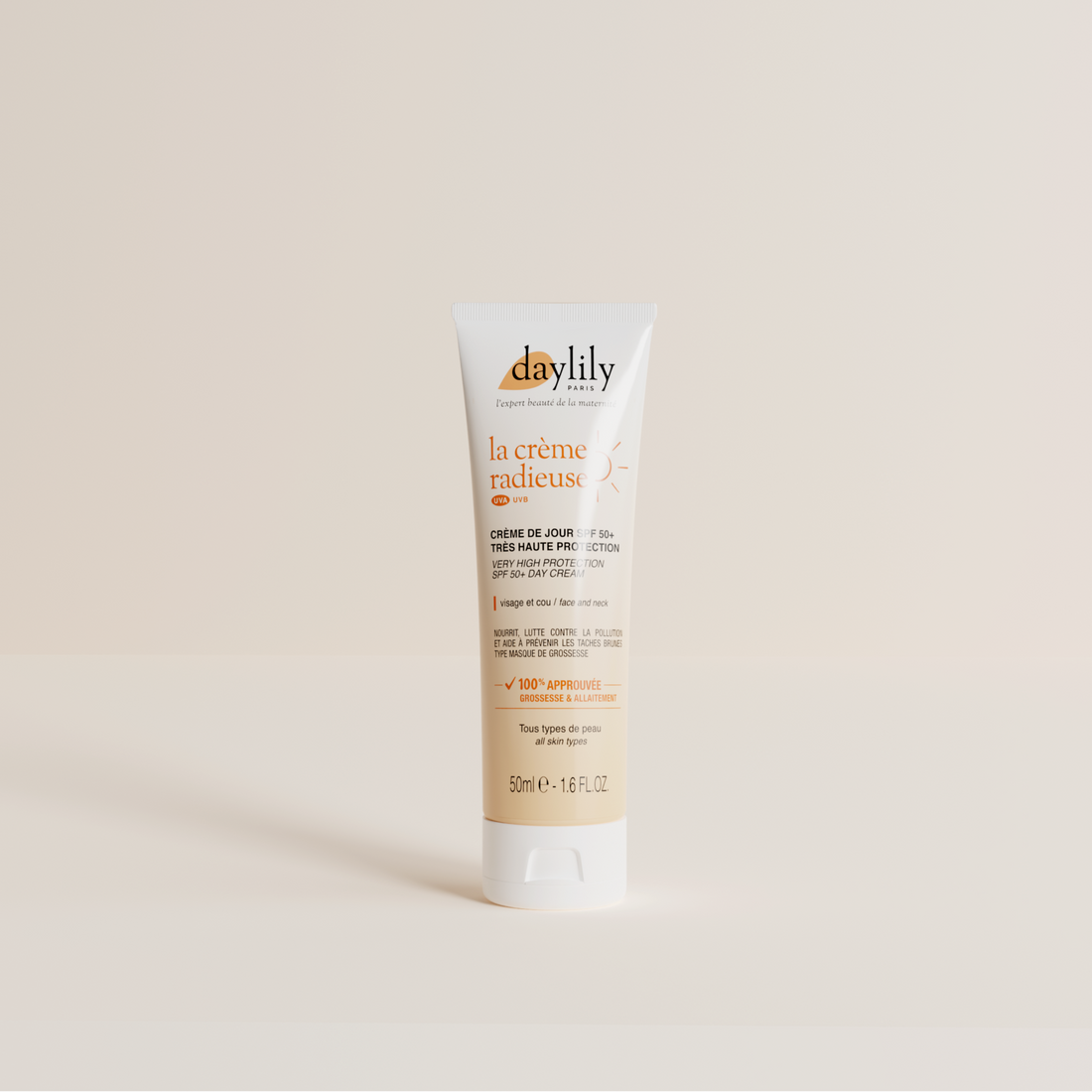
Like you, we dislike sunscreens that are difficult to apply, dry out the skin, leave a white cast, and whose ingredients aren't ideal for pregnant women. That's why we created Radiant Cream, the first 2-in-1 day cream specially designed for expectant and new mothers. It offers both intense hydration and maximum sun protection to combat melasma and preserve your skin's beauty. This product is formulated, of course, with natural, safe ingredients selected for their protective properties, such as anatto oil, a plant oil that naturally and effectively protects against the sun's rays and melasma!
A simple, easy and pleasant gesture to deeply nourish, prevent the appearance of pregnancy mask and offer the skin maximum sun protection, anti-UVA and UVB.
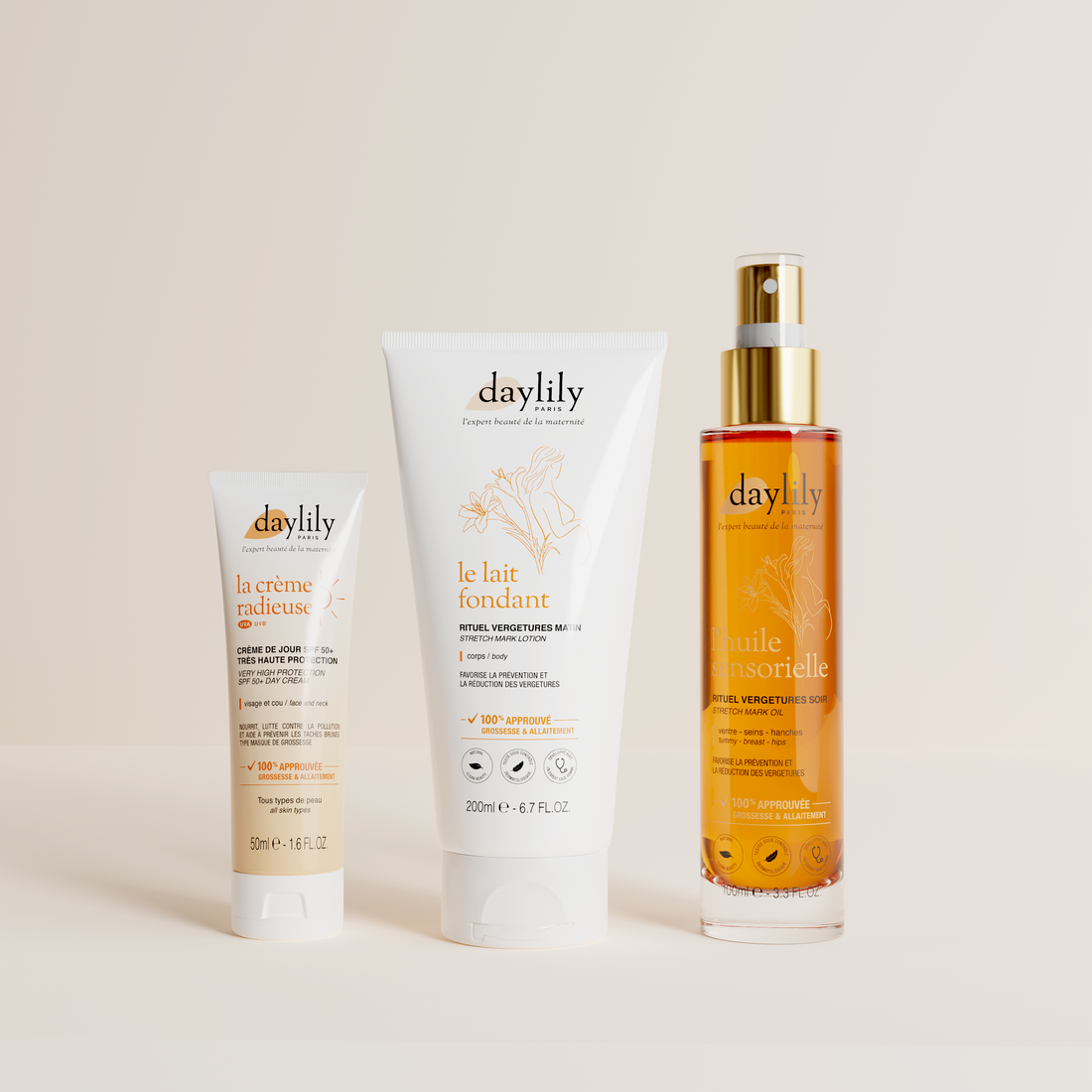
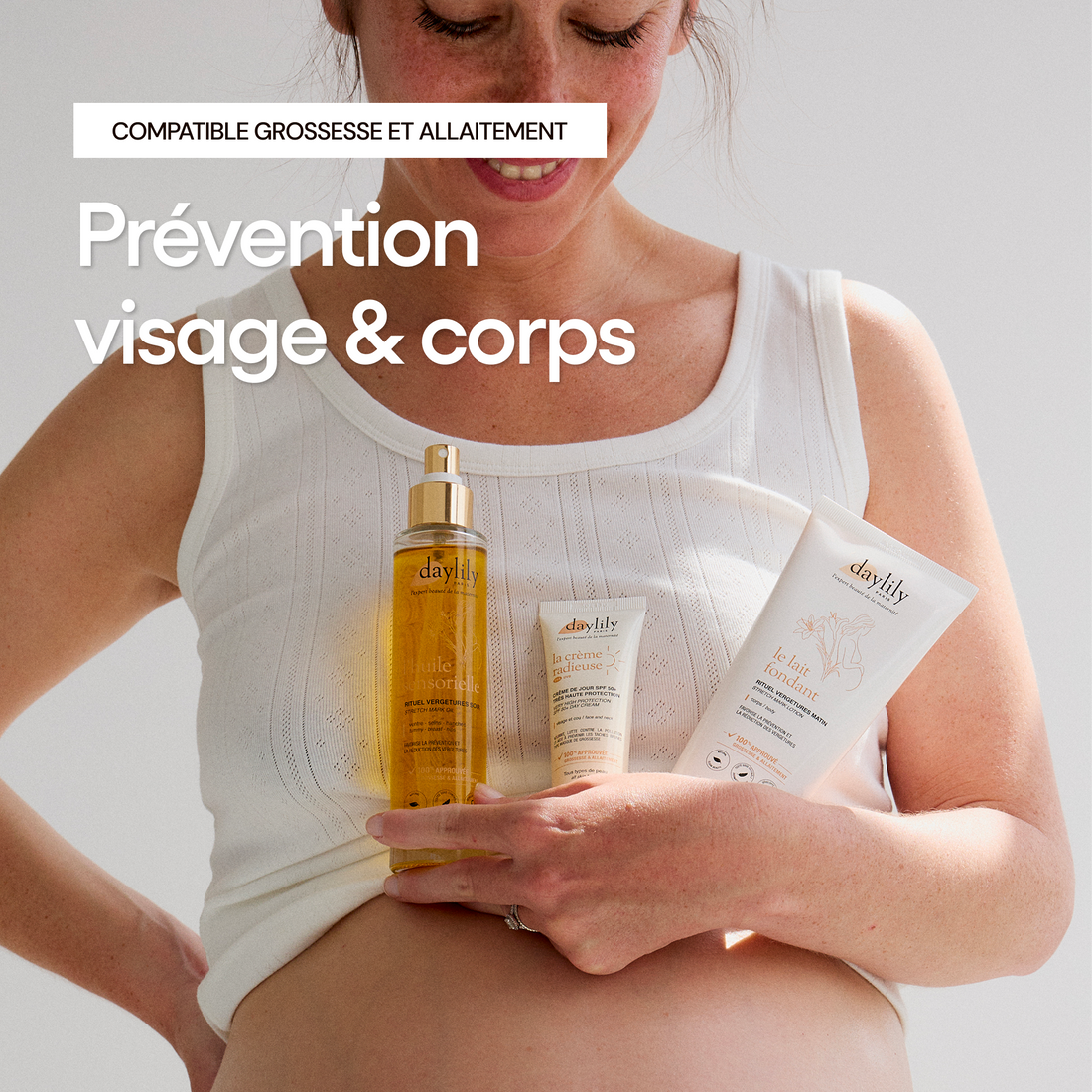
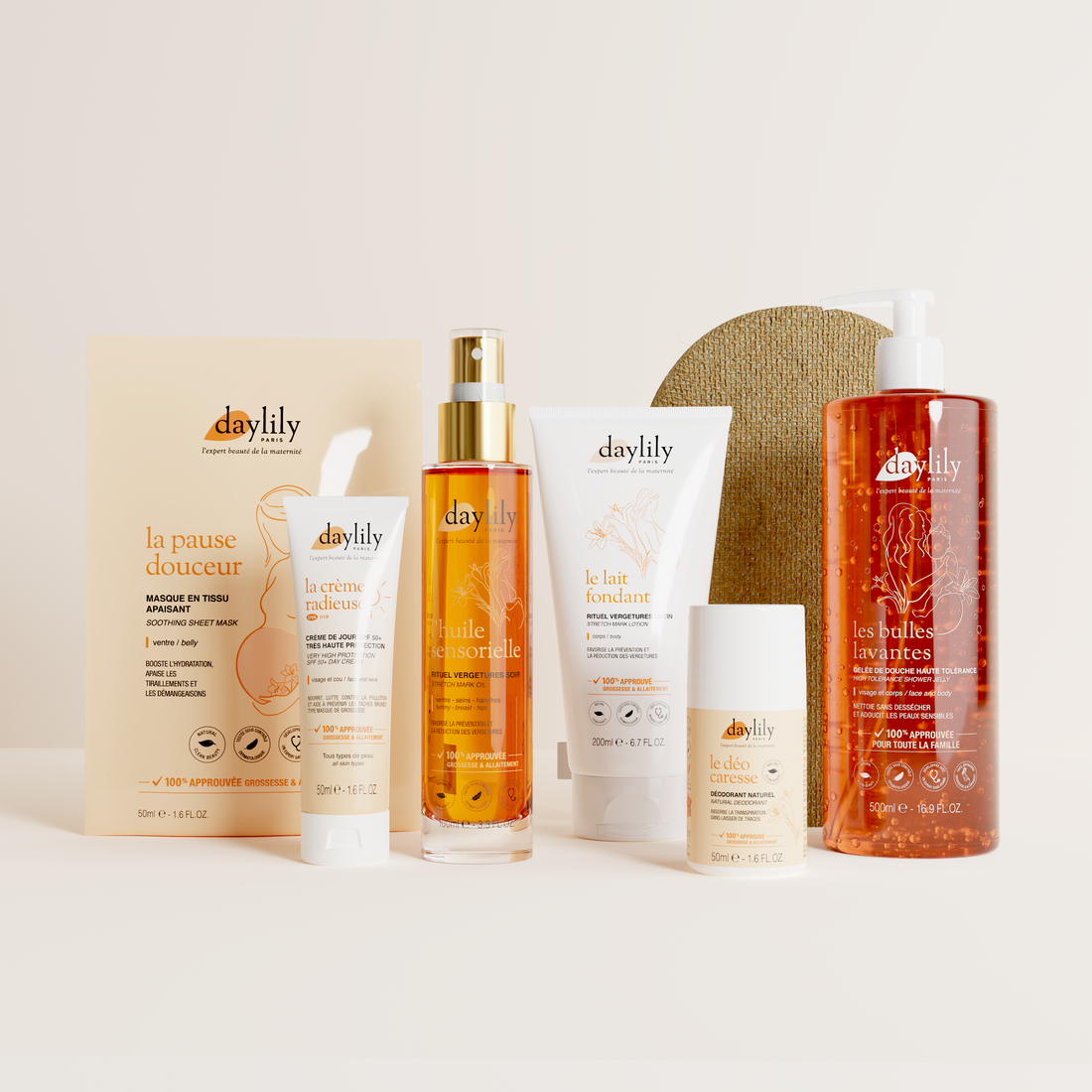
The Radiant Cream leaves no white cast, absorbs quickly, and makes a perfect makeup base. It's available on its own, or in our gift sets alongside our anti-stretch mark body care products, making your pregnancy a truly pampering and comfortable experience!
FAQs about skincare and pregnancy mask
When can the pregnancy mask appear?
The pregnancy mask (melasma) can appear as early as the beginning of the second trimester, sometimes even earlier, and the risk of developing it remains until the end of breastfeeding. Some pregnant women notice hyperpigmentation of the skin in the first few weeks.
This reaction is linked to increased melanin production, stimulated by pregnancy hormones. If you expose yourself to the sun without sunscreen, the risk increases significantly.
The most affected areas? The upper lip, forehead, cheeks and more generally the skin of the face.
These brown spots can persist for several months after childbirth, or even longer (and sometimes even become permanent) without appropriate care.
To prevent the appearance of melasma (the "mask of pregnancy"), it's best to apply a cream every morning. A day cream with SPF 50, designed for pregnant women, helps protect the skin's surface layers and prevent melasma. Consistency is key.
How to prevent the appearance of the pregnancy mask?
To avoid melasma (the "mask of pregnancy"), it's best to act as early as possible. Start by limiting your sun exposure, especially between 11 a.m. and 4 p.m. If you go out, remember to wear a wide-brimmed hat, sunglasses, and light but covering clothing.
Every morning, apply an SPF 50+ sunscreen to your entire face, paying particular attention to the outermost layers of your skin. Choose a sunscreen formulated for pregnant women, without controversial filters. For example, Crème Radieuse combines sun protection with moisturizing care.
In the evening, take the time to moisturize your facial skin. This step soothes and supports the skin's balance in the face of hormonal changes.
By protecting your skin day after day, you reduce the risk of developing sunspots. Prevention remains the best routine.
Do all pregnant women develop melasma (the mask of pregnancy)?
No, not all pregnant women develop melasma (the "mask of pregnancy"). Around 70 to 80% may experience brown spots, but it's impossible to know in advance if this will affect you, so it's best to protect your skin at all times!
Your skin type also plays a role: darker skin tones are more prone to developing brown spots, but fair skin can also react. What really makes the difference is sun exposure. The more frequent the exposure without sun protection, the greater the risk. To avoid melasma (the "mask of pregnancy"), apply a suitable day cream as soon as you get a positive pregnancy test, even on cloudy days.
What is the best cream to prevent melasma (pregnancy mask)?
The best cream to prevent melasma (pregnancy mask) is a day cream with SPF 50, specially formulated for facial skin. It contains neither essential oils nor controversial UV filters.
Choose a product enriched with protective plant-based ingredients, suitable even for sensitive skin. Its light, non-whitening texture makes it easy to apply daily. For optimal protection, apply it every morning to sun-exposed areas, then reapply as needed.
In addition, adopt a gentle routine: cleansing, moisturizing, sun protection.
Can melasma (the "mask of pregnancy") reappear during a second pregnancy?
Yes, melasma (the "mask of pregnancy") can reappear during a second pregnancy, especially if you developed brown spots the first time. Areas already affected become more sensitive to light and hormonal changes. Melanin production increases again, and the sun remains a powerful trigger, especially without sunscreen.
To avoid the mask, apply a day cream with SPF 50, designed for facial skin, every morning.
Gently moisturize the superficial layers of the skin. A regular routine can really limit its appearance… or its intensity.
Questions fréquentes
Quand peut apparaître le masque de grossesse ?
Comment prévenir l’apparition du masque de grossesse ?
Est-ce que toutes les femmes enceintes développent un masque de grossesse ?
Quelle est la meilleure crème pour prévenir le masque de grossesse ?
Est-ce que le masque de grossesse peut revenir à la deuxième grossesse ?
Découvrez votre routine en 2 minutes et profitez de -10% sur votre 1ere commande