
Sun cream for pregnant women Daylily Paris
 LIVRAISON OFFERTE
DÈS 49€ D’ACHAT

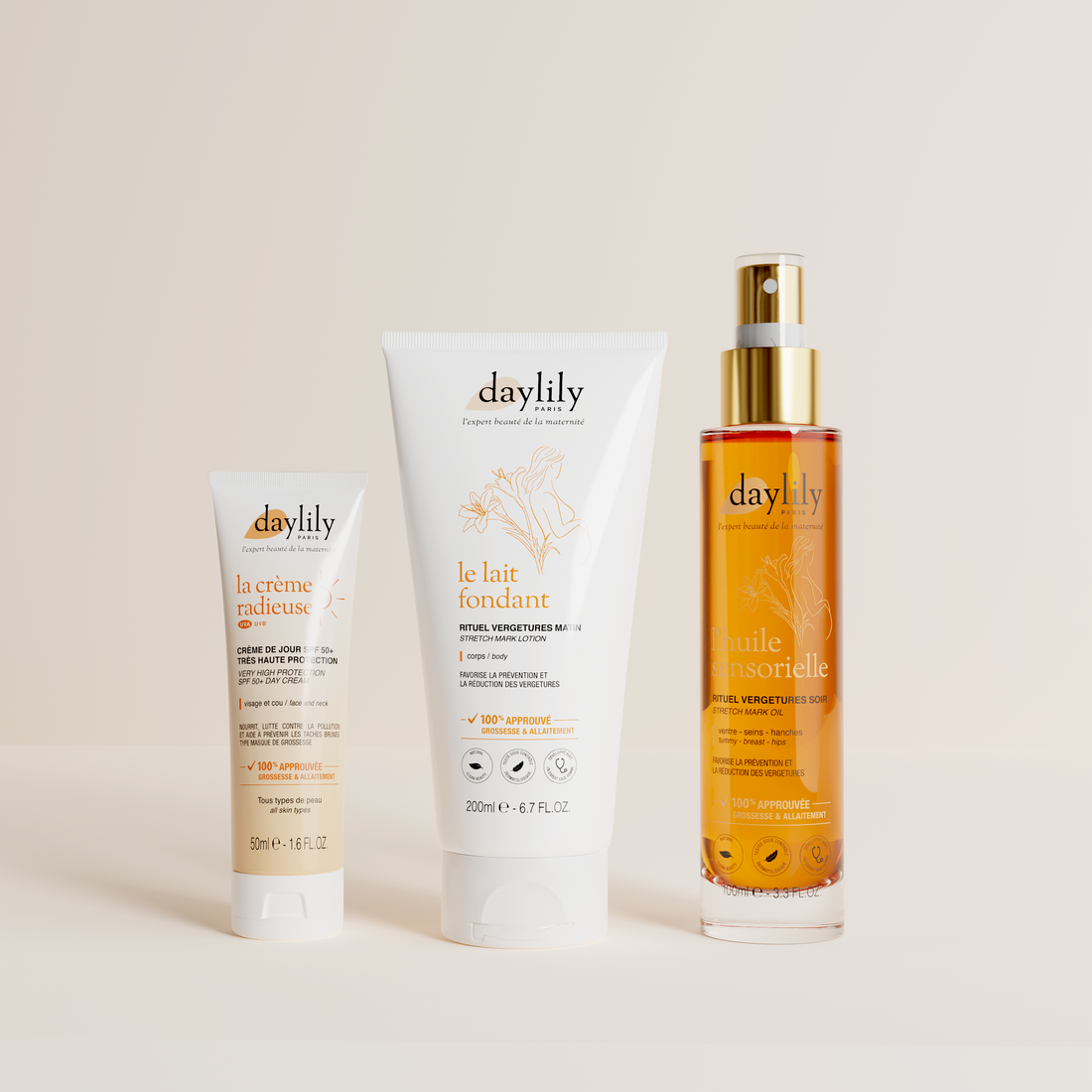
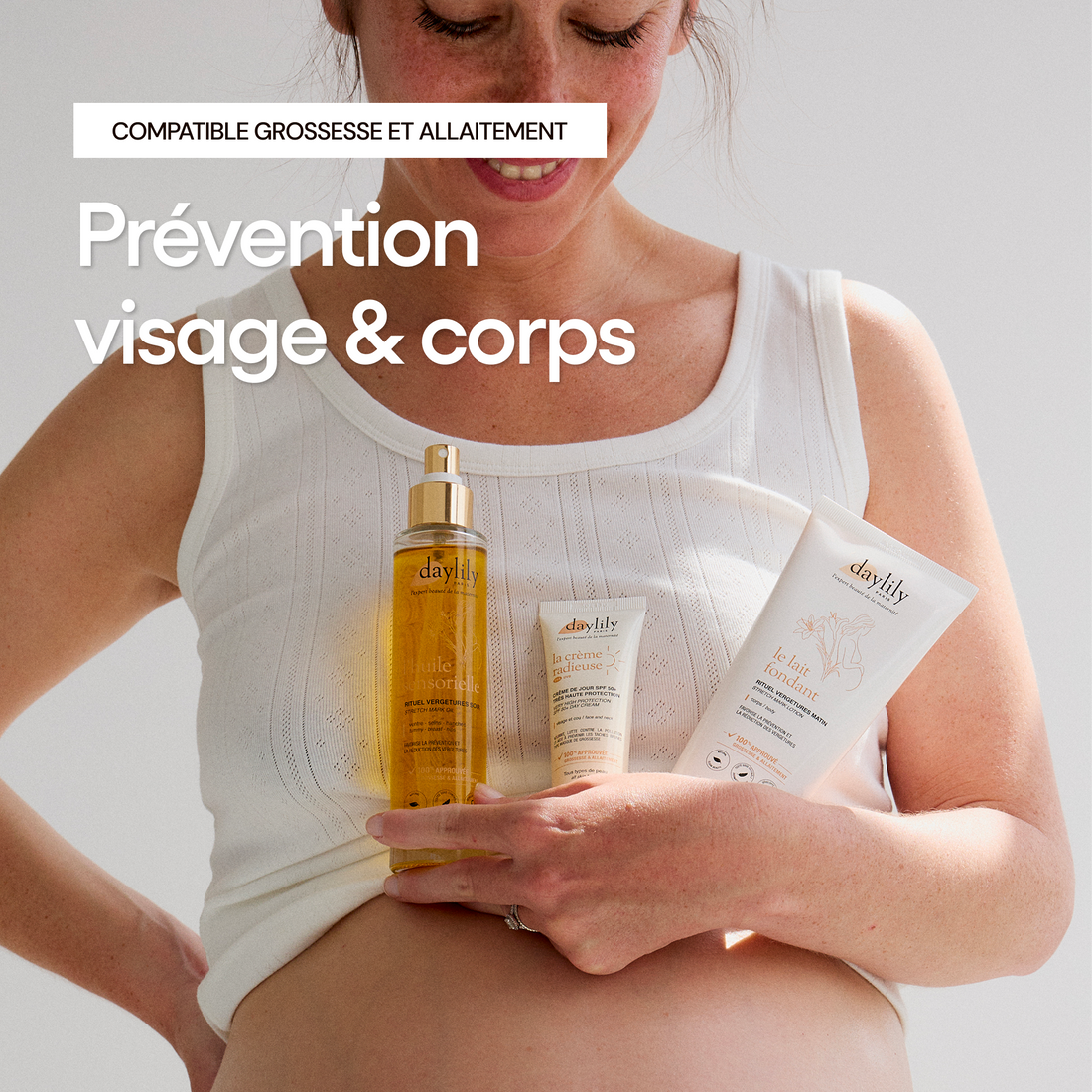
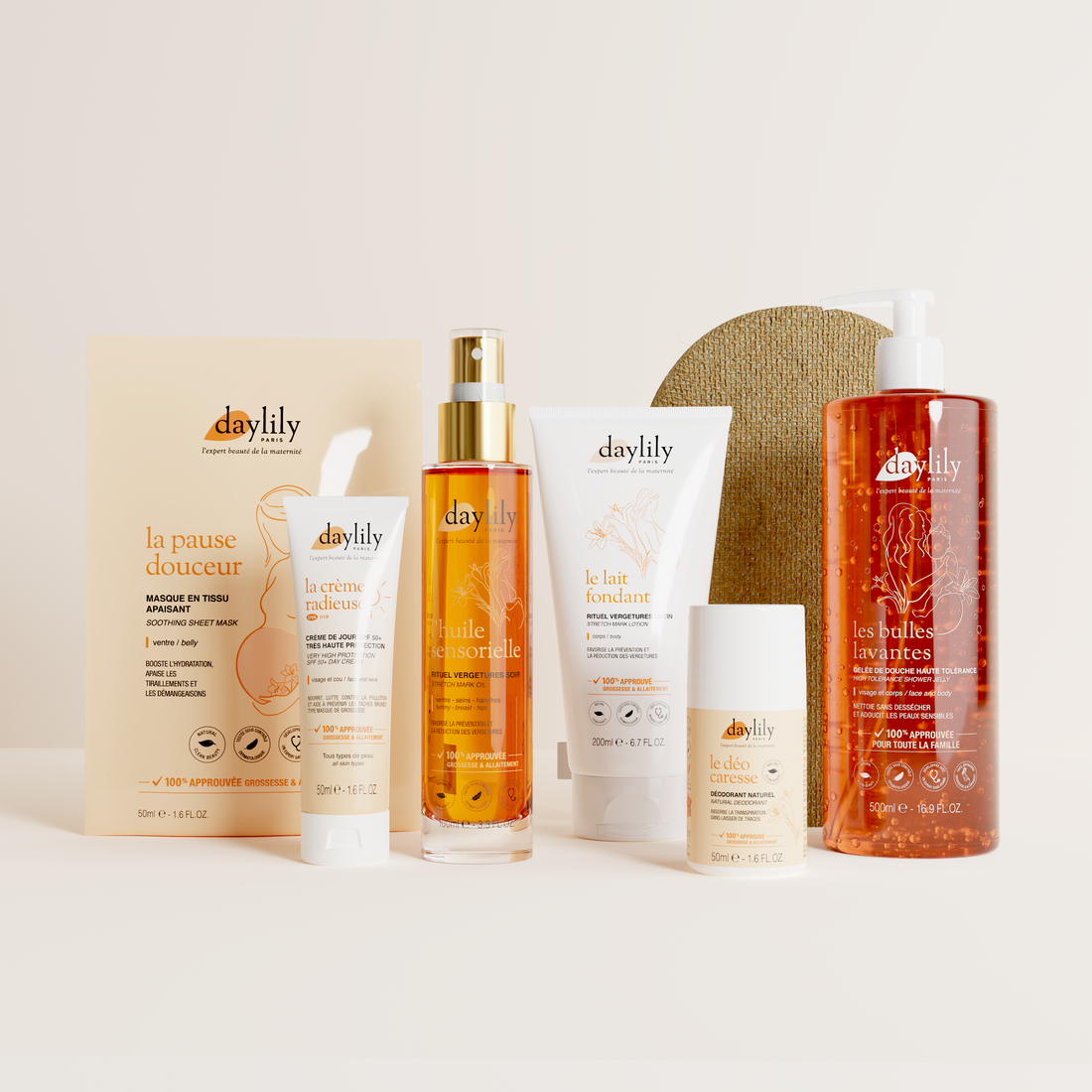




Discover our categories


Our Best-Sellers




Which sunscreen should a pregnant woman choose?
You've long since adopted the "sunscreen" reflex when the warmer weather returns, but did you know that during pregnancy, your skin becomes even more sensitive to the sun's rays, regardless of the season? Indeed, during pregnancy, your skin naturally produces more hormones and more melanin, the pigment responsible for tanning. Your epidermis becomes more reactive to UVA and UVB radiation and can develop pigment spots—usually brown—located on areas exposed to the sun: the forehead, cheekbones, or around the mouth. This is the infamous "mask of pregnancy ," which some expectant mothers dread! It most frequently appears during the second trimester and isn't always limited to the face: the neck, décolletage, and shoulders can also develop these brown spots! All the more reason to protect your skin by providing maximum sun protection from the moment you announce your pregnancy, whatever the season.
Brown spots can indeed appear even in winter, and the bad news is that no pregnant woman and no skin type is truly immune: darker skin tones are generally more at risk, but melasma – the scientific name for the mask of pregnancy – can absolutely appear even if you have fair skin and blonde hair. That's why it's recommended to adopt the right habits by always having a sunscreen specifically formulated for pregnant women on hand. From the very beginning of your pregnancy, remember to protect your face systematically. Our advice? Apply a high-protection sunscreen as soon as you step outside, and reapply it every two hours to limit the risk of developing melasma. In hot weather, it's of course advisable to wear a wide-brimmed hat or a cap to avoid direct sun exposure by staying in the shade. At the beach, it's recommended to wear a one-piece swimsuit with UV protection, and sunscreen for the rest of your body is, of course, essential.
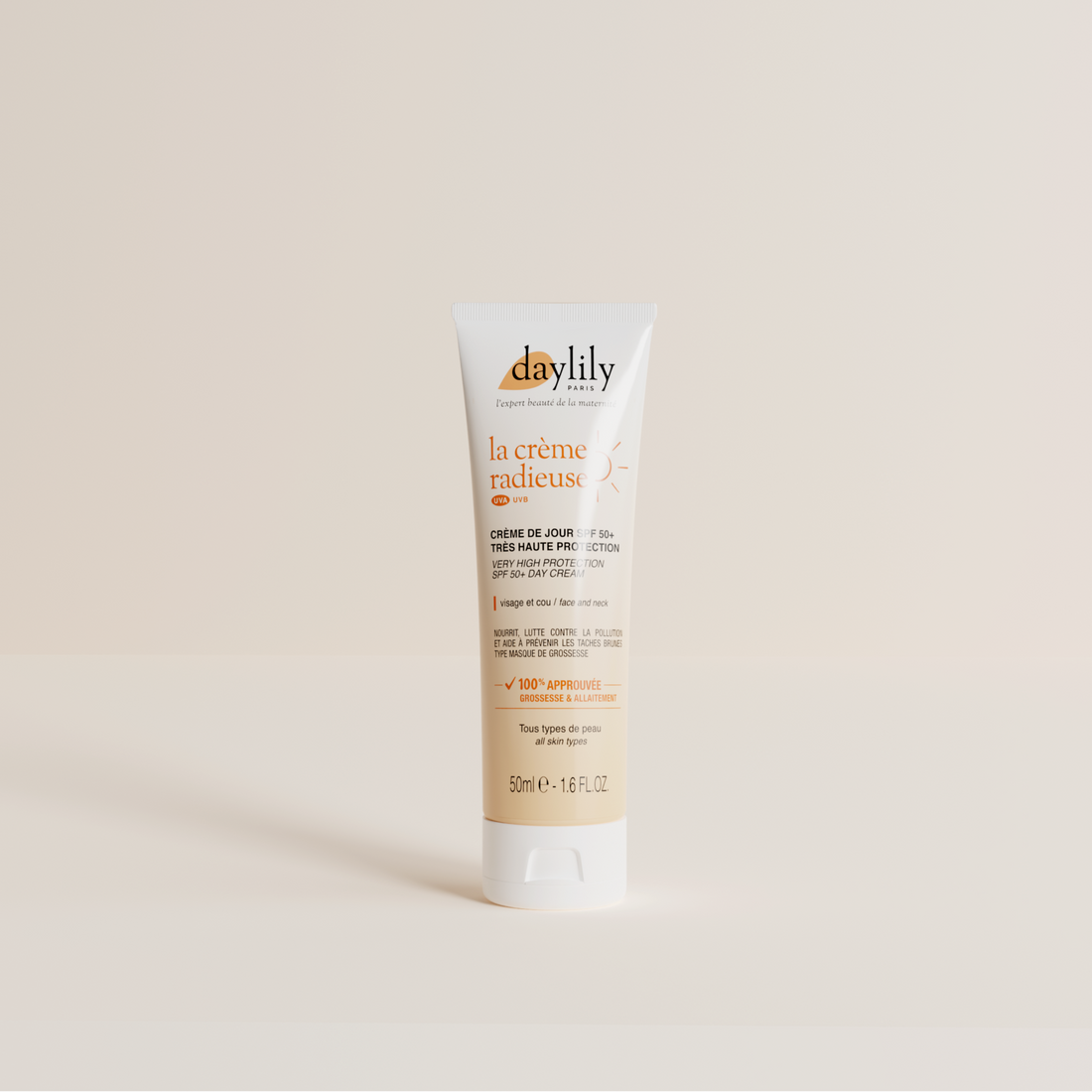
Perhaps you're hesitant to use sunscreen while pregnant, and that's perfectly understandable given how often sunscreen ingredients are criticized for their harmfulness (carcinogenic sunscreens, endocrine disruptors, or simply pollutants). At Daylily, we understand your concerns and have developed an SPF50+ sunscreen guaranteed free of ingredients harmful to the health of both mother and baby! Our Radiant Face Cream is formulated with natural ingredients, including glycerin, which intensely moisturizes; Annatto oil, which provides natural sun protection; and a marine-derived active ingredient, Ocea Defence®, which strengthens the skin barrier. It also contains organic filters.
This face cream, like all Daylily face and body care products , adheres to a strict formulation charter, which guarantees its perfect safety during pregnancy and breastfeeding.
The Radiant Cream is unique in that it's a 2-in-1 cream : both a pregnancy sunscreen and a day cream , it deeply hydrates your skin, which can become dehydrated more quickly than usual due to hormonal changes. This allows you to give your skin maximum sun protection while providing intense hydration, all in one simple step!
Like you, we dislike the greasy, sticky feeling and white cast that many sunscreens can leave on the face. That's why Radiant Cream SPF50+ absorbs quickly, allowing you to apply makeup immediately afterward! It's suitable for all skin types, even sensitive, and its light, biscuity scent makes it a pleasure to use while expecting. Melasma (the "pregnancy mask") can occur during pregnancy, but also while breastfeeding. If you choose to breastfeed, continue using Radiant Cream to protect your face from dark spots and maintain luminous, perfectly hydrated skin in all circumstances!
Why are we prone to brown spots and hyperpigmentation during pregnancy?
When a woman is pregnant , hormonal changes stimulate the production of melanin , the pigment responsible for tanning and dark spots. This hyperpigmentation, often exacerbated by sun exposure, manifests as darker areas known as melasma (the " mask of pregnancy" ). It is therefore essential to apply appropriate sun protection to minimize this risk. At Daylily, we recommend a very high SPF sunscreen, such as our Radiant Cream , specially formulated for all women, including pregnant and breastfeeding women , which effectively protects while moisturizing. It is enriched with organic filters known for their safety , suitable for pregnant women , to preserve the beauty of your skin without compromising the safety of your baby.
Why shouldn't you expose yourself to the sun while pregnant?
Pregnant women are advised to limit their sun exposure for several reasons. Skin is more sensitive during pregnancy and prone to developing melasma, also known as the mask of pregnancy, characterized by brown spots on the face . This overproduction of melanin due to hormonal changes increases the risk of hyperpigmentation . Furthermore, extreme heat can also put additional strain on the cardiovascular system, which is already under considerable stress during pregnancy. It can also exacerbate problems with the lymphatic system and blood circulation, worsening symptoms such as heavy legs.
To protect your skin and well-being, at Daylily we suggest a high protection sunscreen like our Radiant Cream, which offers both care and protection without compromising on your health and that of your baby.
How to avoid the pregnancy mask?
To prevent melasma (pregnancy mask), daily sun protection is essential. Use a broad-spectrum sunscreen like Daylily's Radiant Cream SPF 50+, which blocks both UVA and UVB rays, in summer and winter. Wear a wide-brimmed hat and sunglasses for added physical protection. Reapply your sunscreen every two hours and after swimming or sweating. Stay in the shade between noon and 4 p.m., when the sun's rays are strongest. Incorporate antioxidants into your skincare routine to strengthen your skin's defenses against sun damage. Moisturize your skin well and maintain a diet rich in vitamin C to promote an even complexion.
What type of sun protection should I use?
During pregnancy, choose a specific sunscreen like Daylily's Radiant Cream SPF 50+, which respects both your skin's increased sensitivity and the needs of your developing baby. Opt for a formula free of parabens, alcohol, strong fragrances, and controversial ingredients , ensuring safe use during pregnancy. Choose a cream with safe, broad-spectrum organic filters for protection against both UVA and UVB rays. The texture should be light and easy to apply without leaving a white cast, making it suitable for daily use. A good sunscreen for pregnant women absorbs quickly, deeply nourishes and hydrates, supporting the skin barrier without irritating the skin.
Why does using the right sunscreen make all the difference during pregnancy?
When you're expecting a baby, you no longer choose your skincare products haphazardly. And this is especially true for sunscreen. An unsuitable formula may contain filters or ingredients that are not recommended, or even harmful to the baby's development. It's therefore best to opt for a sunscreen designed for pregnant women, tested and safe. A suitable cream effectively protects against melasma (the "mask of pregnancy"), while preserving hormonal balance. It also limits common skin reactions: redness, tightness, and small pimples. During this period, the skin barrier is more fragile. Choose a product that does more than just protect: it hydrates, soothes, and strengthens the skin. At Daylily, we've chosen a combination of safe mineral and organic filters, without controversial ingredients. The result: our Radiant Cream provides complete protection, designed with you in mind, for total peace of mind.
Organic, mineral, chemical sunscreen: how to find your way around?
When you're pregnant or postpartum, it's natural to want the best for your skin. Organic creams often rely on mineral filters like zinc oxide or titanium dioxide. They're effective, but sometimes leave a white cast. Organic (or chemical) filters, on the other hand, are more subtle on the skin and offer a pleasant, sensorial texture. This is the choice of our Radiant Cream, perfectly suited to your daily routine. The most important thing is to choose a product free of endocrine disruptors, alcohol, and harsh fragrances, to protect without irritating. Your skin is changing; it deserves gentleness and security.
How to properly apply sunscreen during pregnancy?
For effective protection, apply your sunscreen about 30 minutes before going outside. Don't forget often-neglected areas: forehead, ears, neck, hands… Remember to reapply every two hours, and always after swimming or heavy sweating. Apply about two fingers' worth of product to properly protect your face.
What sun protection should I use while breastfeeding?
Even after giving birth, your skin can remain reactive, especially if you're breastfeeding. Pregnancy mask (melasma) doesn't always disappear, and sun exposure can sometimes reappear. To protect yourself safely for your baby, choose a facial sunscreen that's compatible with breastfeeding. Ideally, look for a gentle formula, free of endocrine disruptors and strong fragrances, and approved by a toxicologist. Postpartum, every little bit helps: continue to hydrate, soothe, and protect your skin with a specific product that's compatible with breastfeeding. Create your own simple, safe, and effective routine that respects your skin's natural balance… while taking care of yourself, without compromise.
FAQ Sunscreen & Pregnancy
How much product should be applied?
Use an amount equivalent to two fingers to protect your face. Reapply every two hours, especially after swimming or sweating.
Can you get a tan with SPF 50+?
Yes, but gently. High protection doesn't prevent tanning, it simply allows you to tan more slowly… and safely.
Do we need a different formula for the face and body?
That's preferable. The upper body, being more exposed, often needs a light, non-greasy, and non-comedogenic texture.
Questions fréquentes
Quelle quantité de produit appliquer ?
Peut-on bronzer avec un SPF 50+ ?
Faut-il une formule différente pour le visage et le corps ?
Découvrez votre routine en 2 minutes et profitez de -10% sur votre 1ere commande