Cosmetics and pregnancy: composition and ingredients to avoid

Are you pregnant and wondering which cosmetic ingredients are best avoided during pregnancy? We'll tell you everything in this article!
- Endocrine disruptors
- Essential oils
- Some sunscreens
- Mineral oils
- Alcoholic beverages
- Formaldehyde and formaldehyde releasers
- Sodium laureth and Lauryl sulfate
- Thiazolinones
- Allergens
- Ingredients banned in all European cosmetics
When pregnant, you generally know what to avoid in terms of food and drinks, or even sports activities, but believe it or not, there are also ingredients to avoid… in cosmetics . Skin is an organ of your body, like any other, and therefore what you put on it is not harmless , for you or for the baby.
Many ingredients used in cosmetics are not recommended during pregnancy. This applies to both conventional and natural/organic cosmetics, which are not necessarily a guarantee of safety when pregnant. Even some specific "maternity" products can sometimes contain unsuitable ingredients. It's essential to carefully read the ingredient list (INCI list) or refer to the usage instructions . When the label states: "Use from the 4th month of pregnancy," this may mean that unsuitable ingredients are present in this pregnancy cream, and that the manufacturer wants to avoid any risk associated with use during the first trimester, which is crucial for fetal development.
Rest assured, there are still cosmetics that are suitable for you 😉
Let's get down to business, here is the list which we have tried to be as exhaustive as possible.
Endocrine disruptors
According to the WHO (World Health Organization), endocrine disruptors are chemical substances that can disrupt our endocrine system . Our health depends on its proper functioning. This system regulates the secretion of hormones in our body. These hormones are essential at many levels: metabolism, growth, development, mood, and more. Endocrine disruptors can disrupt one or more functions of the endocrine system and thus increase the risk of developing health problems.
Even more than at any other stage of life, pregnancy is governed by the secretion of hormones in women, including estrogen and progesterone, as well as pregnancy-specific hormones such as hCG.
The hormonal system plays a fundamental role in a healthy pregnancy because our body releases these hormones at very specific times. Their role is crucial for the implantation of the embryo, the proper development of the fetus , and the triggering of milk production after childbirth, among other things.
The risks associated with exposure to endocrine disruptors during pregnancy can be numerous . Babies may have lower or higher than average weight and/or head circumference, as well as genital malformations. There is also a significant increase in conditions such as autism, diabetes, obesity, and a growing number of cases of precocious puberty.
However, it's important not to jump to conclusions, as endocrine disruptors aren't necessarily the sole cause of these problems. Nevertheless, a growing number of scientists agree that they may play a role.
To summarize, the main endocrine disruptors among cosmetic ingredients are:
Parabens : These are allergens and also interfere with estrogen, a female hormone that plays a key role in pregnancy. Some are suspected of being carcinogenic and dangerous for fetal development. Their presence is indicated either directly by their code name (E214 to E217) or by the suffix "-paraben," such as ethylparaben. Propylparaben is considered the one to be most wary of; butylparaben should also be avoided.
- Phthalates : on the label, look for the term Diethyl Phthalate. They can affect sexual development in men and also contribute to precocious puberty in women. They are known to be toxic to reproduction.
- Glycol ethers : on the label: phenoxyethanol, 2-phenoxyethanol (EGphE), phenoxytol. Currently, phenoxyethanol is not officially classified as an endocrine disruptor, but it is strongly recommended to avoid it in your pregnancy cream as well as in baby products. In addition to being allergenic, it may present carcinogenic risks, fertility problems for men, and toxicity to the fetus.
- Triclosan : it's the same word on the label. It also interferes with estrogen and other hormones.
- BHA : indicated on the label: Butyl hydroxyanisole BHA. This can be carcinogenic and, once again, interferes with estrogen.
- BHT : indicated on the label: Butylhydroxytoluene (BHT). Its toxicity and estrogenic activity are concerning and warrant caution. It can also cause allergic reactions.
- Alkylphenols : look for the term nonylphenol and any compound name derived from Nonoxynol. The latter has proven hormonal activity (estrogens) and can cause DNA damage.
- And also : benzophenone, oxybenzone, 4-methylbenzylidene camphor, resorcinol, cyclopentasiloxane, buthylphenyl methylpropional.
Essential oils
A large majority of essential oils are contraindicated during pregnancy. Generally speaking, and as a precautionary measure, the use of essential oils should be avoided for at least the first three months.
Throughout pregnancy and breastfeeding, if you wish to use essential oils, it is imperative to consult a doctor or pharmacist specializing in essential oils and to strictly adhere to the prescribed dosages.
For your information, essential oils containing ketones are prohibited for pregnant women because they can cause miscarriage (being potentially neurotoxic). Other essential oils to avoid include those that affect the hormonal system. Furthermore, it is recommended not to use essential oils orally or apply them to the abdomen or breasts .
On the other hand, vegetable oils are welcome, for example avocado oil, macadamia oil, rosehip oil, olive oil, etc.
Recognized for their numerous benefits, these vegetable oils are present in our various skincare products.
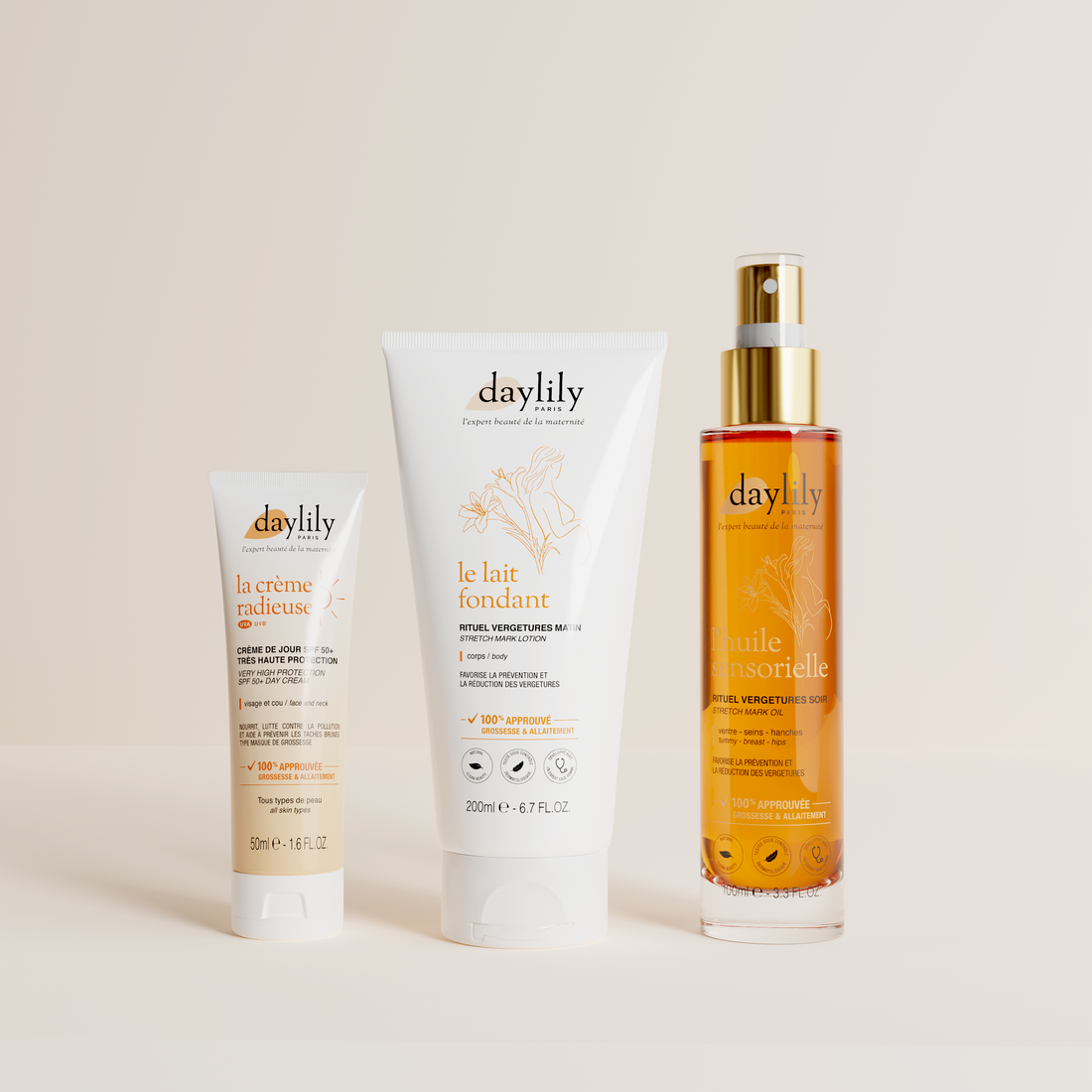
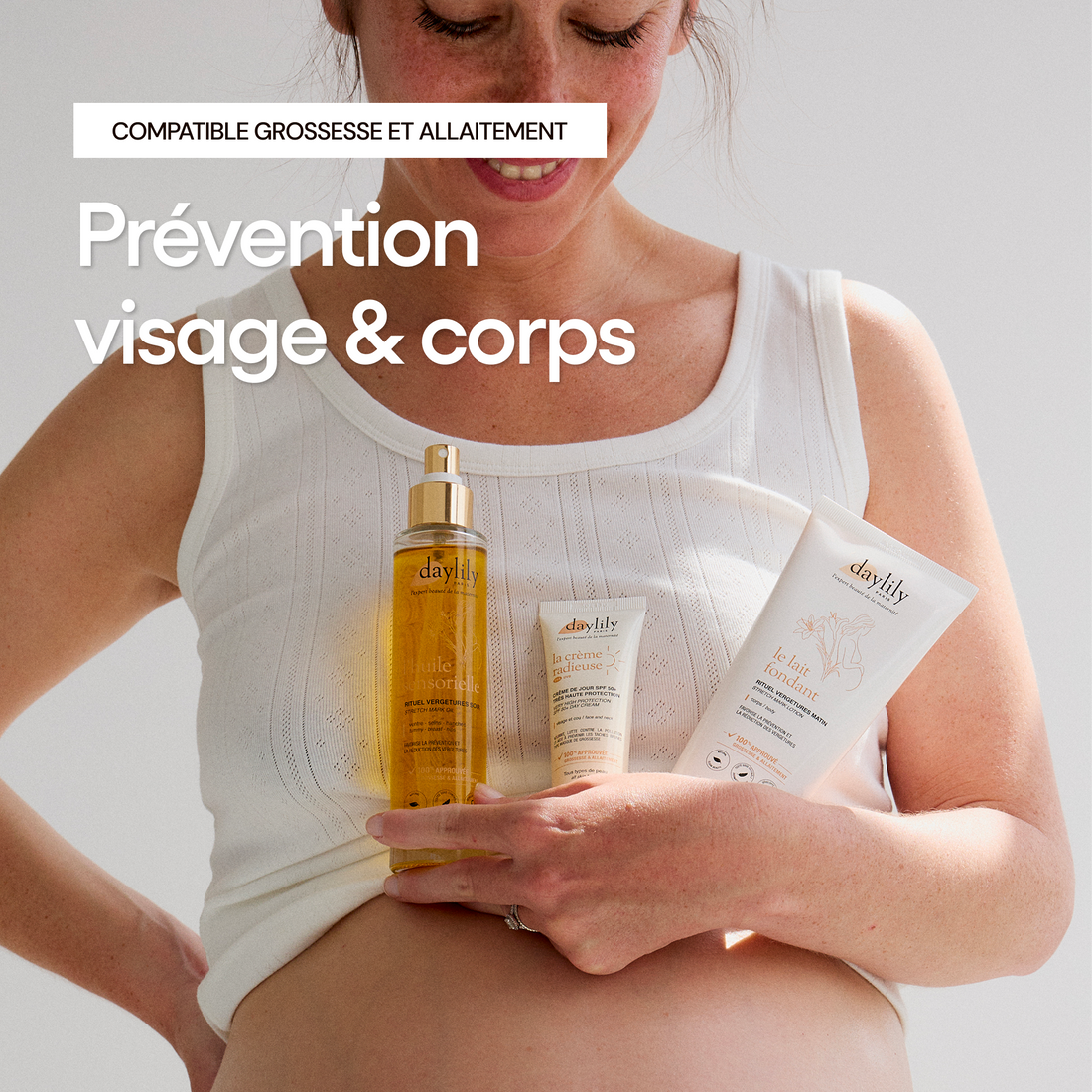
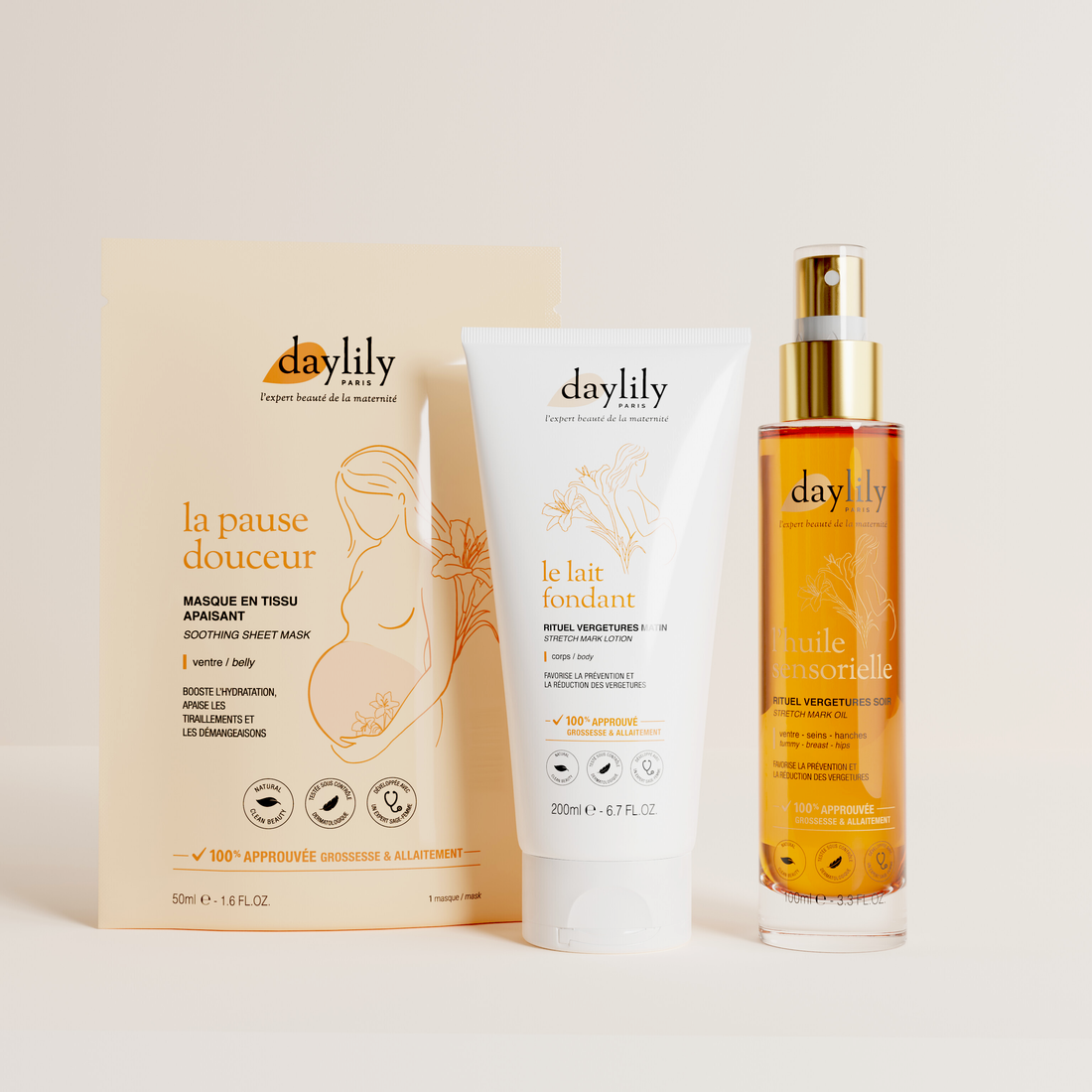
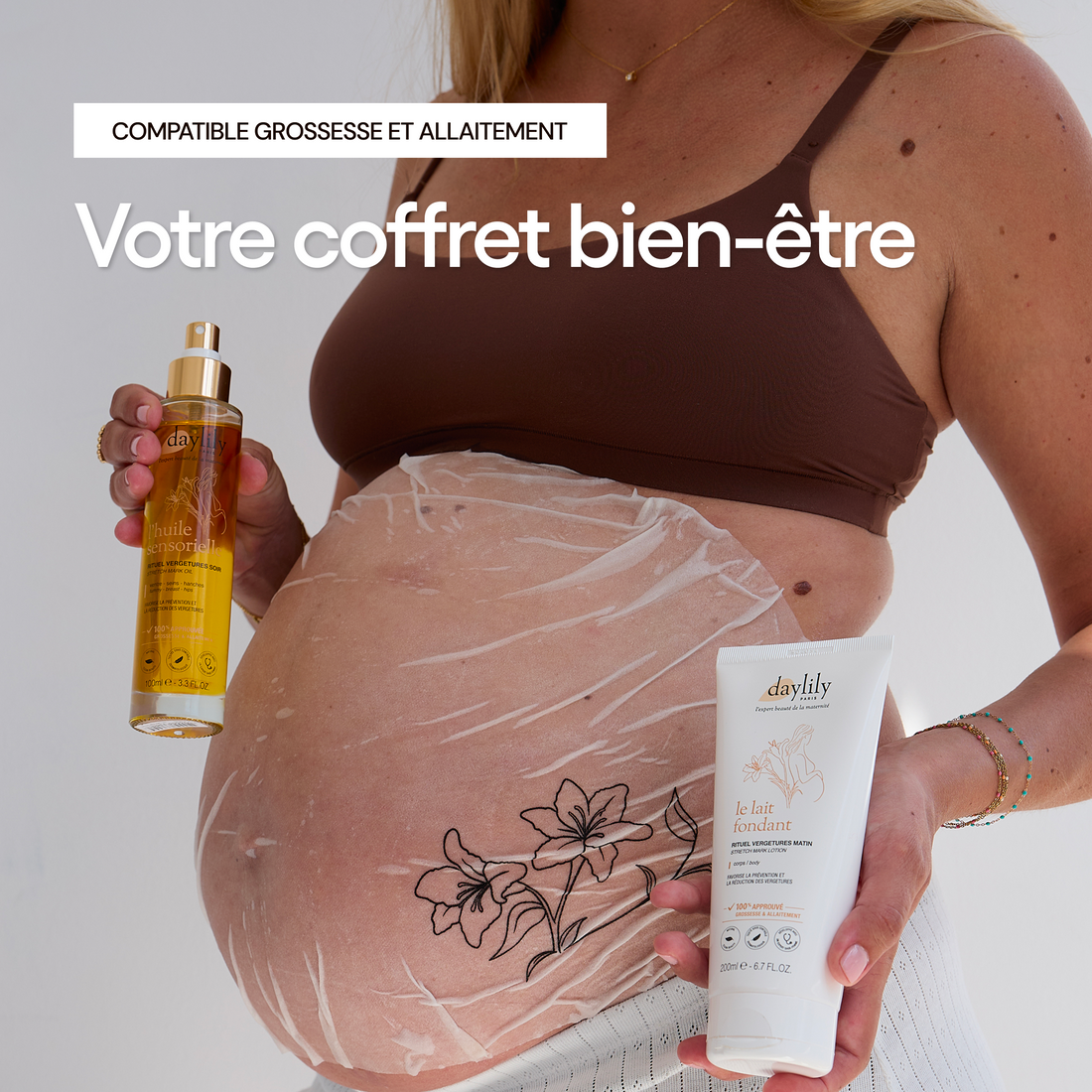
A complex of 5 organic vegetable oils is present in our Anti-Stretch Mark Ritual , composed of a cream & a stretch mark pregnancy oil.
You'll also find olive oil and avocado oil in La Pause Douceur , our soothing sheet mask for the stomach. It instantly relieves tightness and itching and acts as a hydration booster .
=== Adding product 1 ===
Anti-Stretch Mark Ritual
=== Adding product 1 ===
The Sweet Break
=== Adding product 1 ===
Some sunscreens
Sunscreens are a thorny issue. Firstly, many sunscreens are not recommended during pregnancy or breastfeeding because they are among the endocrine disruptors we discussed earlier. Others are allergens and should also be avoided.
The main sunscreens to look out for on the label and to avoid are: Benzophenone-3 (oxybenzone), Homosalate (HMS) 4MBC, Octylmethoxycinnamate (OMC), octyl-dimethylPABA (OD-PABA).
Furthermore, there are very few natural sunscreens suitable for pregnant women because most sunscreens are in nanoparticle form. Nanoparticles are not recommended during pregnancy or breastfeeding. The word " nano " is usually written on the INCI list next to the ingredient, but be aware that this is not always the case.
Nanoparticles pose several dangers . Silicon dioxide and zinc oxide nanoparticles can cause dryness and roughness of the skin. Titanium nanoparticles can disrupt the blood-brain barrier (essential for protecting the brain). Nanoparticles can also affect the activity of a protein responsible for eliminating toxic substances from vital organs.
Their very small size (hence their name nanoparticles) allows them to pass through the barriers of the skin or organs and we do not yet know what effect this could have in the long term.
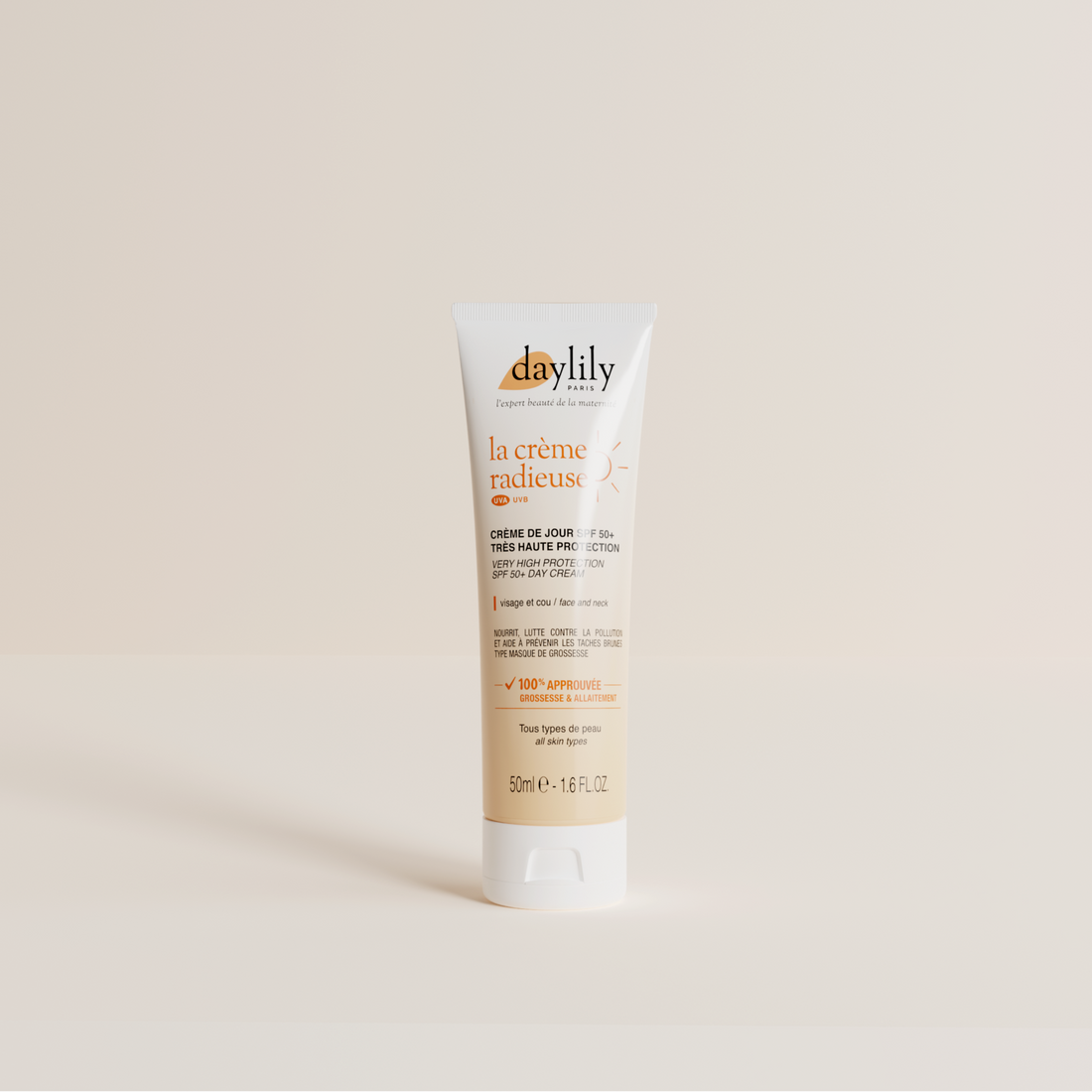
Daylily Paris Radiant Cream is a true innovation. With a perfect balance of natural, nanoparticle-free sunscreens and synthetic sunscreens specifically formulated for pregnancy (free of endocrine disruptors, etc.), we've created an SPF 50+ day cream that can be safely used from the first month of pregnancy and even afterward, while breastfeeding. It's a pleasure to use, as it's non-sticky and leaves no white cast . Skin is nourished and protected against melasma (the "pregnancy mask").
=== Adding product 2 ===
Radiant Cream
=== Adding product 2 ===
2nd Quarter Box Set
=== Adding product 2 ===
Mineral oils
They are widely used in cosmetics and come from petroleum refining .
They are very cheap, hence their massive use, but very bad for the environment.
They are not metabolized by the body and prevent the skin from "breathing." They create an occlusive film on the skin and therefore tend to clog pores. This can lead to the appearance of pimples and blackheads…
On the label , avoid the following ingredients in your pregnancy cream: Paraffinum liquidum, petrolatum, ceresine wax, vaseline, Cera Microcristallina, Ozokerite, Ceresin, Mineral oil, and words ending in -methicone or -siloxane.
Alcoholic beverages
On the label , you will need to look for the terms: alcohol, alcohol denat.
They tend to dry out and irritate the skin.
However, not all cosmetic ingredients containing "alcohol" are actually alcohols; for example, cetyl alcohol is a fatty alcohol. Fatty alcohols are non-toxic and non-irritating to the skin. This category includes, among others: cetyl alcohol, stearyl alcohol, cetearyl alcohol, lauryl alcohol, and myristyl alcohol.
Formaldehyde and formaldehyde releasers
On the label , look for: DMDM hydantoin, imidazolidinyl urea, quaternium-15E. They are potentially carcinogenic according to studies, irritants and allergens.
Sodium laureth and Lauryl sulfate
On the label , you will find: Ammonium lauryl sulfate, sodium lauryl sulfate. These are foaming agents with a strong irritant effect and they damage the skin's hydrolipidic film.
Thiazolinones
Methylchloroisothiazolinone, labeled methylisothiazolinone. They are also known by the registered trademark Kathon CG. They are highly allergenic .
Allergens
Unfortunately, it's difficult to provide specific names to look for on cosmetic product labels. Cosmetic regulations list 26 of the most common allergens : Alpha-Isomethyl ionone, Amyl cinnamal, Amylcinnamyl alcohol, Anise alcohol, Benzyl alcohol, Benzyl benzoate, Benzyl cinnamate, Benzyl salicylate, Butylphenyl methylpropional, Cinnamal, Cinnamyl alcohol, Citral, Citronellol, Coumarin, Eugenol, Farnesol, Geraniol, Hexyl cinnamal, Hydroxycitronellal, Hydroxyisohexyl 3-cyclohexene carboxaldehyde, Isoeugenol, Limonene, Linalool, Methyl 2-octynoate, Evernia prunastri (Oak moss), and Evernia furfuracea (Tree moss). These should be avoided during pregnancy and breastfeeding, but they are not the only ones. Many perfumes are allergenic, whether they are natural or synthetic.
Daylily Paris perfumes have been specially designed with perfumers from Grasse to be suitable for pregnant and breastfeeding women. They are allergen-free and alcohol-free.
Ingredients banned in all European cosmetics
These are ingredients with clearly established risks and which, consequently, are no longer permitted in all cosmetics legally placed on the European market . They include: self-declared CMR substances, plant extracts with risk (Class I – Type I Allergy), ingredients restricted by IFRA due to their sensitizing potential, ingredients labeled R43/H317, and allergen precursors.
We know, that's quite a list! A European project is studying the implementation of a "not recommended for pregnant women" logo... that would be more practical.
In the meantime, opt for skincare products specifically formulated for safe use from the first month of pregnancy, such as our Daylily Paris products . They are formulated without ingredients not recommended during pregnancy, and their safety during pregnancy is guaranteed by an independent toxicologist.
Natural, hypoallergenic, and made in France , they combine pleasure, safety, and effectiveness. And we offer sophisticated textures paired with subtle fragrances for a beautiful pregnancy!
If you'd like to delve deeper into the subject, particularly regarding other cosmetics such as makeup or cleaning products, we highly recommend a book published in February 2016: "The Anti-Toxin Guide to Pregnancy." It is written by one of France's leading experts on toxicity, Dr. Laurent Chevallier, a nutritionist specializing in maternity. It is also co-authored by Claude Aubert, an agricultural engineer specializing in organic farming and healthy eating.