New mom: baby blues, hormonal drop and a practical guide

That's it, you're a mom! Maybe you were one before, but it's still a very emotional experience every time. 🥰
In this article, Audrey, the founder of Daylily, talks about her feelings , but also about practical tips to support you in these first days with baby!
Daylily Paris is a brand of clean, sensorial, and effective skincare products, made in France and 100% compatible with pregnancy and breastfeeding. We are also committed to sharing valuable information for an informed and confident motherhood. 🧡
=== Adding product 1 ===
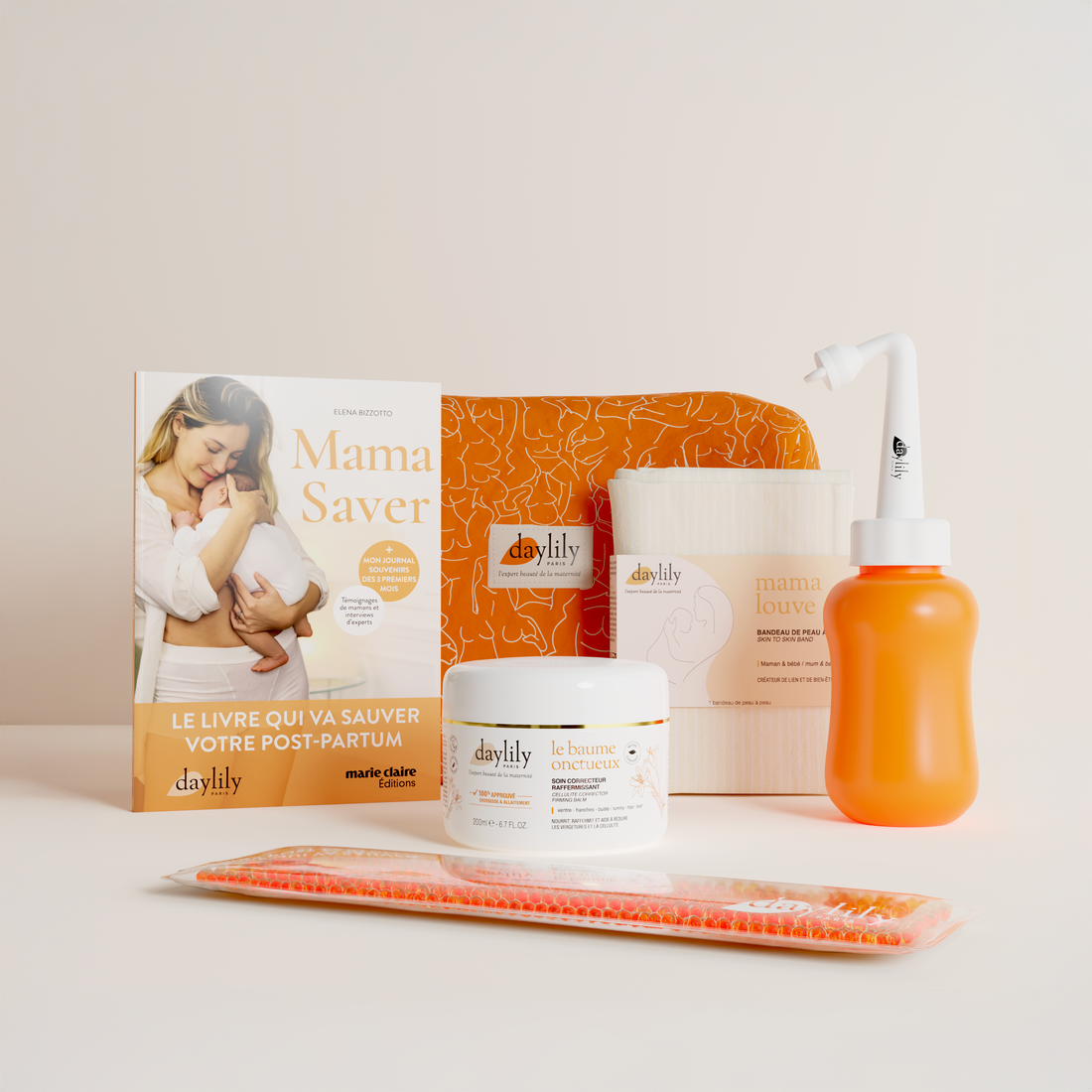
Mama Saver
=== Adding product 1 ===
Postpartum Gift Set
=== Adding product 1 ===
Emotions
First of all, you will not all become a mother in the same way. There are those who immediately have maternal instinct , who feel fulfilled and happy … but there are also those for whom it is more difficult .
If this is the case for you: don't worry, it's normal and you're not alone !
You would have liked to feel only joy and happiness about this birth, and yet you feel sad, depressed… You might be experiencing a mild (or severe) case of the " baby blues ." The sudden drop in hormones is largely responsible for this state. Add to that the physical and sometimes mental exhaustion , as well as the feeling of being overwhelmed by the arrival of this newborn. Am I capable of taking good care of him/her? Am I feeding him/her properly? Why is he/she crying? These are all questions you are asking yourself. Babies can be difficult to understand; you have to learn to recognize their emotions. Give yourself time to learn to recognize them.
Rest assured: experiencing these kinds of emotions is perfectly normal and common; it in no way means you're a "bad mother"! Be kind to yourself, rest, listen to your body, and take the time to get to know your baby . Use your time in the maternity ward to let the medical staff guide and advise you. Talking about your feelings with the medical team, your partner, or loved ones can help you gain perspective and cope better with this situation. It may seem difficult, but little by little, your love for your baby will grow and take over, whether it takes a day for some or longer for others. If this feeling persists despite your efforts, don't hesitate to talk to your local maternal and child health center (PMI) or see a psychologist specializing in perinatal care.
Dare to make your own decisions
Even without mentioning baby blues, you may still have moments of doubt ("am I doing this right?"), learn to listen to yourself and trust yourself ! You instinctively know what is good or not for your baby and for yourself.
Breastfeeding , for example, is a personal choice that belongs entirely to you. There's no right or wrong between breastfeeding and bottle-feeding. Your breastfeeding experience may go well, or it may not go as well as you'd hoped. So listen to your body and do what's best for you. It will also be best for your child! Breastfeeding shouldn't be a time of stress or anxiety; quite the opposite.
Don't hesitate to seek advice from specialists such as midwives or lactation consultants. And if it turns out that breastfeeding isn't the ideal solution for you, that's perfectly fine; it doesn't mean at all that you're not a good mother!
Some quick tips
Furthermore, once you've left the maternity ward and returned home, did you know you're entitled to a home visit from a midwife ? This visit is fully reimbursed for the first 12 days of your baby's life. Simply contact a self-employed midwife who practices in your area. Perhaps a health insurance advisor will have visited you in your hospital room to schedule an appointment directly. You can then ask all the questions you have. The midwife can check your breastfeeding, weigh your baby (which will save you a trip to the local health center), and so on. Don't hesitate to take advantage of this opportunity to share your feelings and ask any questions that are on your mind!
Don't forget that it's really important to get plenty of rest after the arrival of a baby, even if it can be difficult at times. During your partner's paternity or parental leave (now 28 calendar days), take advantage of this time to settle in, establish your household, and also make time for yourself to rest.
Don't hesitate to ask for help and support . If your friends, cousins, parents, or in-laws ask what you'd like, tell them it would be wonderful if they could come over for an hour or two to help you tidy up the house or cook you a nice meal. You can also hire a nanny (specializing in infants) if you need someone full-time.
Another tip, entirely inspired by my own experience but which might also help you if your little one is having trouble sleeping through the night (as was the case with my daughter), is swaddling . This technique involves wrapping your baby in a suitable swaddle. This keeps them in a secure, snug position, similar to when they were still in your womb. This keeps their hands close to their body, preventing them from waking suddenly due to the Moro reflex. Well-known in infants, this reflex is characterized by a sudden movement of the arms towards the head. This method can also soothe colic, so it's worth a try. However, be sure to use a proper swaddling technique by researching it or asking your midwife to demonstrate it during your home visit.
Administrative procedures
1/ Register the birth
By registering your child in the civil registry, you acknowledge their existence. This is how their birth certificate can be created. You will need:
- the birth certificate issued by the doctor or midwife
- your family record book if you already have one
- the act of recognition if you did it before the birth
- the joint declaration of choice of name form, if applicable
- the parents' identity document.
Be sure to register your child within 5 days of their birth (excluding the day of birth, and extending the deadline to the following Monday if the baby was born on a Wednesday, Thursday, or Friday). Only the father or someone who assisted at the birth (midwife, doctor, or other) can complete the registration at the town hall of the birthplace. If you're lucky, a civil registrar might visit your maternity ward to assist new parents; you could then complete the registration with them.
2/ Register your child with the Health Insurance
With the many pediatrician appointments your baby will need, don't wait to register your baby on your Ameli account or by phone. You will be asked for certain documents, such as the birth certificate. Once the registration process is complete, your child will be registered under both of your names. You should also remember to update your health insurance card (carte vitale).
Add your child to your health insurance policy
Contact your health insurance provider to check which documents they need (usually a birth certificate, a copy of your health insurance certificate, and a letter stating your policy number). While you're at it, ask if your policy includes a birth bonus!
4/ Declare the birth to the CAF
Any assistance you may be eligible for will only be implemented once this process has been completed.
If you are a benefit recipient, log in to your online account to complete the declaration form, then attach a scan of the relevant pages from your family record book or the child's birth certificate as supporting documentation. If you are not a benefit recipient, send one of these documents by mail to your local family allowance office (CAF) along with the statement of circumstances and income declaration (both of which can be downloaded online).
5/ Confirm the pre-registration at the nursery
If you have already submitted an application for daycare, don't delay in confirming your pre-registration once your baby is born, otherwise it may be cancelled. Usually, you only need to submit a birth certificate (sometimes a confirmation slip may be included in the registration packet).
And there you have it, you know everything now, enjoy every moment! It always goes by too fast... I wish you much joy and happiness with your family. 🧡