Melasma: how to make the pregnancy mask disappear?

The infamous pregnancy mask, also called melasma or chloasma , is often dreaded by pregnant women, just like stretch marks! How can you prevent its appearance, or reduce its appearance once it has appeared on your face? What solutions and dermatological treatments should you consider to obtain visible results? Do peels and laser treatments give good results? Here are all the tips to help you get rid of the brown spots of the pregnancy mask!
=== Adding product 1 ===
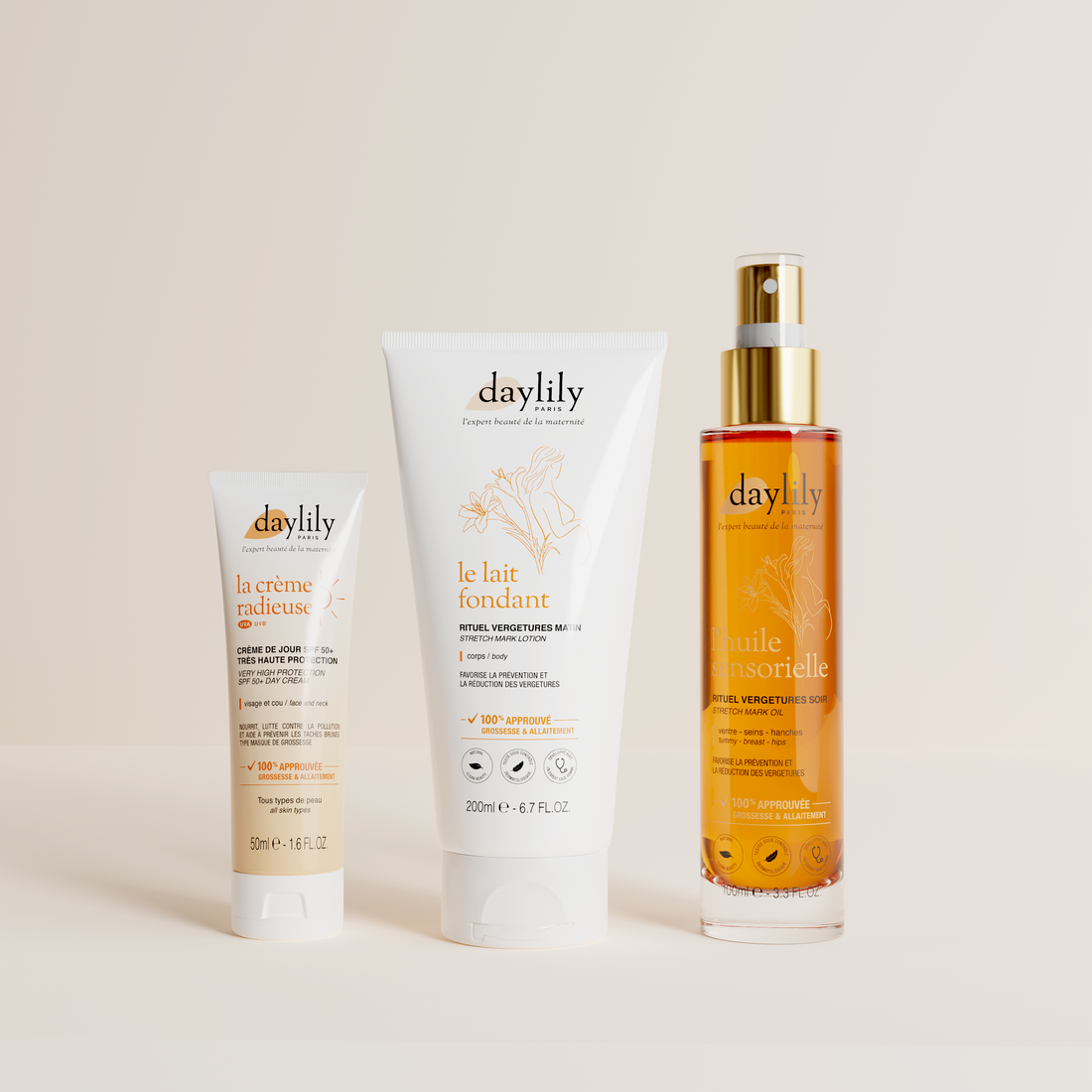
2nd Quarter Box Set
=== Adding product 1 ===
- What is the pregnancy mask?
- How to avoid pregnancy mask or melasma?
- What products should I use to combat melasma or the mask of pregnancy?
- Adapting your makeup routine without clogging your skin
- How to completely get rid of the pregnancy mask or melasma?
- Why does the pregnancy mask persist in some cases after childbirth?
- FAQ about the pregnancy mask
What is the pregnancy mask?
Pregnancy mask, melasma, chloasma…All these terms refer to the same phenomenon: the appearance of brown spots on the face (cheeks, forehead, nose…) and décolleté during pregnancy, generally from the 4th month of pregnancy.
This hyperpigmentation can affect all pregnant women, regardless of their skin type, although those with darker skin are more prone to developing spots due to hormonal changes. Indeed, it is hormonal activity , and particularly the increase in estrogen levels , that is responsible for the appearance of melasma: estrogen triggers an overproduction of melanin , making the skin more sensitive to the sun and UVA/UVB rays, and causing brown spots if it is not adequately protected. Rest assured, there are solutions and specific products to help you avoid the "mask of pregnancy"!
How to avoid pregnancy mask or melasma?
It's a long-term process, since melasma (the "mask of pregnancy") can appear during pregnancy, but also afterward, if you're breastfeeding . The problem is that once it's there, it can persist for several months after childbirth, and in some cases, never completely disappear (or reappear every summer)! For some women, it poses a real aesthetic problem that bothers them on a daily basis. To combat melasma, the key is: Prevention ! It is indeed possible, by protecting your skin well and adopting tailored care, to avoid its appearance or reduce its extent.
To do this, we protect our skin as much as possible by following simple rules that you probably already know: we avoid sun exposure between 12 and 16 hours , we wear a wide-brimmed hat to protect our skin well, we wear sunglasses, we seek shade whenever possible, and above all, we do not go outside without sun protection of at least SPF 50, whatever the season and the weather of the day!

What products should I use to combat melasma or the mask of pregnancy?
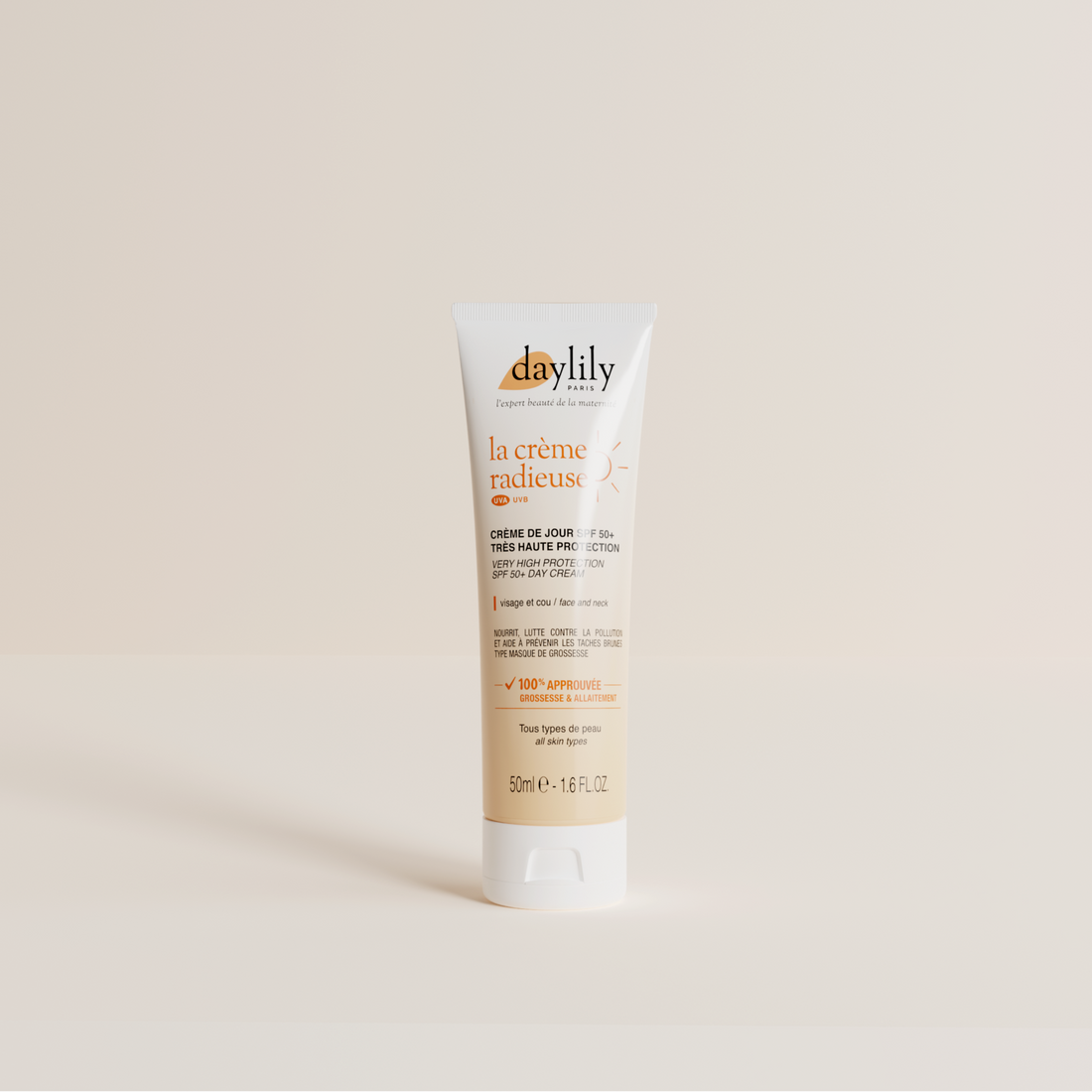
It's not easy to know where to start when you consider that many sunscreens contain endocrine disruptors and other controversial ingredients—everything you want to avoid during pregnancy! We understand that cosmetics used by pregnant women must have an impeccable composition, so you can use them every day with complete peace of mind and safety! That's why we developed Radiant Cream. Gentle and hypoallergenic, it's also suitable for all skin types, even sensitive skin.
=== Adding product 2 ===
Radiant Cream
=== Adding product 2 ===
The ideal way to use it? Apply the Radiant Cream first thing in the morning, and slip it into your handbag to reapply as often as needed throughout the day. Its non-greasy, non-whitening texture (suitable for all skin tones) also makes it an excellent makeup base – saving you precious time in the bathroom in the morning!
Adapting your makeup routine without clogging your skin
Start by applying an SPF primer in the morning; it protects you from the sun, the primary trigger of melasma. Only SPF 50 truly limits the oxidation of dark spots. Use about two fingers' worth of cream for optimal protection. Our Radiant Cream SPF 50+ is an excellent makeup base.
If your melasma spots are light, a CC cream in a matching shade is enough to correct your complexion without weighing down your skin. For more pronounced patches, you can apply a concealer : peach tones for fair skin, orange for darker skin; these shades neutralize brown and prevent a grayish effect. Then set your makeup with a fine , non-comedogenic powder to maintain a fresh finish without clogging pores.
To draw attention away from blemishes, define your eyes with lengthening mascara or choose a tinted balm that moisturizes and highlights your lips. Always check the ingredients of products (especially if you are pregnant).
In the evening, remove everything (but always gently ): first, a cleansing oil; second, a gentle gel to remove makeup residue and leave the skin barrier intact. This simple makeup routine protects, conceals, and respects delicate skin.
How to completely get rid of the pregnancy mask or melasma?
Have brown spots appeared on your face? Continue to protect your skin with sunscreen: daily use of this product will help minimize the extent of melasma.
Generally, melasma (the "mask of pregnancy") fades a few months after the baby's arrival or after breastfeeding. However, sometimes it doesn't disappear completely, even after your baby is six months old. In this case, alternative treatments can be considered.
Several solutions exist to make the pregnancy mask disappear completely, by consulting a specialist doctor or dermatologist who will offer you more targeted treatments.
Getting rid of melasma at the dermatologist's office
He will be able to advise you on several solutions, depending on your budget… but also on your skin.
The first option is to use a medicated cream , usually available by prescription and prepared in a pharmacy , rich in depigmenting agents. The most common composition is based on hydroquinone, an organic compound that inhibits the enzyme responsible for melanin production. This cream may also contain other active ingredients, including anti-inflammatory agents and those that stimulate cell renewal, to gradually lighten the skin. This topical treatment should be followed for three months, with one application every evening. However, this treatment is not without risk to your health and the environment. It is important to follow medical advice.
The second option is to schedule a superficial peel , most often using AHAs (enzymatic fruit acids), ideal for exfoliating and toning the skin, as well as brightening and evening out the complexion. After the peel, it's essential to use a daily cream with mineral sunscreens to protect your skin and prevent recurrence. Again, this treatment is not without risk and can sometimes damage healthy cells. Pay close attention to the products used; they should be of European origin to ensure a controlled dosage of active ingredients.
Laser treatment for melasma
Laser treatment is undoubtedly the fastest and most effective treatment to remove the pregnancy mask, but it is also the most expensive and the most aggressive for the skin.
Since melasma is caused by hyperpigmentation and dilation of micro-vessels , the laser destroys these vessels to regulate pigmentation and thus even out skin tone.
As for fractional lasers , which penetrate deeper into the dermis (and therefore usually require surgery), they extract the pigments responsible for skin color and simultaneously tighten the skin. It's important to note that fractional laser peels only treat the face intermittently, so several sessions will be necessary to ensure their effectiveness across all targeted areas.
As with all cosmetic procedures, it's important to remember that these treatments are not without risks and require a prior medical consultation . Depending on the patient's skin type and desired results, the doctor will determine the appropriate treatment or specific settings (if laser treatment is used) for a fully personalized procedure.
And then what?
Furthermore, be aware that even if your melasma (pregnancy mask) disappears in the weeks or months following childbirth, it can reappear with each new exposure, especially next summer. Therefore, we recommend continuing to use a high SPF sunscreen afterward.
Don't forget that by making SPF 50+ sunscreen a daily habit, you'll minimize the risk of developing melasma (pregnancy mask). This is a good reason to always carry a face cream like Crème Radieuse , which will allow you to enjoy the sunny days with complete peace of mind while you're expecting!

Why does the pregnancy mask persist in some cases after childbirth?
For many new mothers, dark spots lighten on their own once their hormones stabilize; four to six months is often enough to see a difference. This timeframe also allows you to calmly observe your skin before considering more targeted treatments. If needed, consult professionals who can determine the most suitable treatment for your skin.
Sometimes, breastfeeding or the first summer sun exposure reactivates melanin production: the pregnancy mask then seems to linger or reappear. In all cases, always and regularly apply high-SPF sunscreen, wear a hat, and moisturize your skin every morning to limit these minor recurrences and allow your complexion time to gradually regain its natural radiance.
FAQ about the pregnancy mask
Does the pregnancy mask always disappear?
It fades in most new mothers; many studies note a marked lightening between 4 and 12 months postpartum. Approximately 30% of the spots may persist longer, especially without sun protection.
Can I apply a depigmenting cream while breastfeeding?
Yes, if it contains safe active ingredients such as azelaic acid deemed compatible with breastfeeding (check the composition with a dermatologist or other trained health specialist before application).
Melasma or sunspot: how to tell the difference?
Melasma forms irregular, symmetrical patches , centered on the forehead, cheeks, and upper lip, influenced by hormones. Solar lentigo (or sunspots) appears as small, round spots, often on the hands and chest, primarily linked to overexposure to the sun.
Does breastfeeding contribute to the development of melasma (pregnancy mask)?
Breastfeeding sometimes prolongs hormonal activity, which can slow the natural fading of dark spots or even, in some cases, cause new ones to appear. The best defense remains the daily application of SPF 50+ sunscreen and wearing a hat, since sunlight always reactivates pigmentation, whether you are breastfeeding or not.
Does the mask come back every summer?
The risk exists because, in all cases , sun exposure stimulates melanin production and intensifies the pigmentation of the melanin already present. In some women, melasma (the "mask of pregnancy") fades, while in others, it can recur. The safest way to protect yourself: sunscreen with an SPF of 50, a hat, and sunglasses.