Why and how to re-educate your perineum?

If you've recently given birth, you'll likely be offered pelvic floor rehabilitation . The pelvic floor is the muscle located on the lower wall of the pelvis that supports the weight of the baby in utero. Weakened by pregnancy and childbirth , it often needs to be strengthened through specific exercises. While pelvic floor rehabilitation is often seen as a chore by new mothers, it remains very important. We'll explain why, while also giving you a brief overview of the different pelvic floor rehabilitation methods.
Daylily Paris is a brand of clean, sensory and effective skincare products, made in France and 100% compatible with pregnancy and breastfeeding. We are also committed to sharing quality information for informed and uninhibited motherhood. 🧡


- The importance of the perineum during pregnancy and childbirth
- Why do perineal rehabilitation?
- How do you know if you need pelvic floor rehabilitation?
- What are the different methods?
- Re-educate your perineum at home
The importance of the perineum during pregnancy and childbirth
To better understand the usefulness of perineal rehabilitation, let's go back to anatomy lessons!
During pregnancy, the perineum keeps your pelvis in place and supports the uterus which is stretching at high speed. It will therefore naturally tend to distend under the weight of the fetus, even more so if you are expecting a “big” baby or several. And hormonal impregnation does not work in its favor: when pregnant, your body secretes more estrogen, progesterone and relaxin, a hormone which softens the ligaments and causes muscle relaxation. This is why proper rehabilitation may be necessary even in the event of a cesarean delivery.
If you give birth vaginally, the perineum will of course be heavily stressed: the muscle fibers stretch to allow the child to pass through. Episiotomy, that is to say the incision of the perineum sometimes necessary to help the baby come out, represents additional trauma.
You will have understood: the perineum plays a key role in pregnancy and childbirth and needs a little attention after birth.
Why do perineal rehabilitation?
If perineal rehabilitation is so important, it is because a perineum that is too weak can have consequences on your health and your daily life. Normally, the perineum is muscular enough to contain urinary leakage, for example when you cough, laugh or when you practice an impact sport such as running. After giving birth, you may experience problems with urinary or fecal incontinence.
In the most severe cases, relaxation of the perineum can lead to organ descent. Also called prolapse , organ descent is characterized by feelings of heaviness in the vulva or perineum, frequent urges to go to the toilet and difficulty emptying the bladder properly – which can lead to urinary tract infections. repetition. Prolapse may result in surgery to properly reposition the organs in the pelvis.
The perineum also plays a role during sexual relations: its contractions increase pleasure and sensations during intercourse.
How do you know if you need pelvic floor rehabilitation?
It is during the post-natal consultation – a few weeks after giving birth – that your gynecologist will assess the tone of your perineum. To do this, he will carry out a clinical test: he will ask you to contract this muscle after inserting a finger into your vagina and will assess its strength. If a few lucky people escape perineal rehabilitation, in practice, most women will have to tackle it: it is one of the significant events of the postpartum period, which is also called the 4th trimester.
Rehabilitation can be done with a midwife or with physiotherapists. You can start it six to eight weeks after giving birth – with the green light from your doctor – but it can be postponed if you are experiencing difficult childbirth, if you have had a cesarean section or an episiotomy. It can even be done several months after the birth of the child: it is never too late to strengthen your perineum!
What are the different methods?
There are several pelvic floor rehabilitation techniques, and your practitioner will first offer you an assessment session to determine the most appropriate one. Here are the most common:
- Manual rehabilitation : via vaginal examination, your midwife or physiotherapist guides you to become aware of your perineum and contract it effectively. You will be able to work the anterior, posterior areas or all of the muscles of the perineum. These exercises are often combined with visualization techniques to help you become aware of the perineum and make it work more effectively.
- Electrotherapy : a probe will send electrical stimulations to the muscle. It is a passive and painless method: the intensity of the current is adjusted so that work remains comfortable.
- Biofeedback with probe : in this case, the rehabilitation is also done with a probe but unlike electrostimulation, you will be asked to regularly contract your perineum. You will visualize a curve on a screen and you will have to perform the most effective contractions possible, respecting the release times.
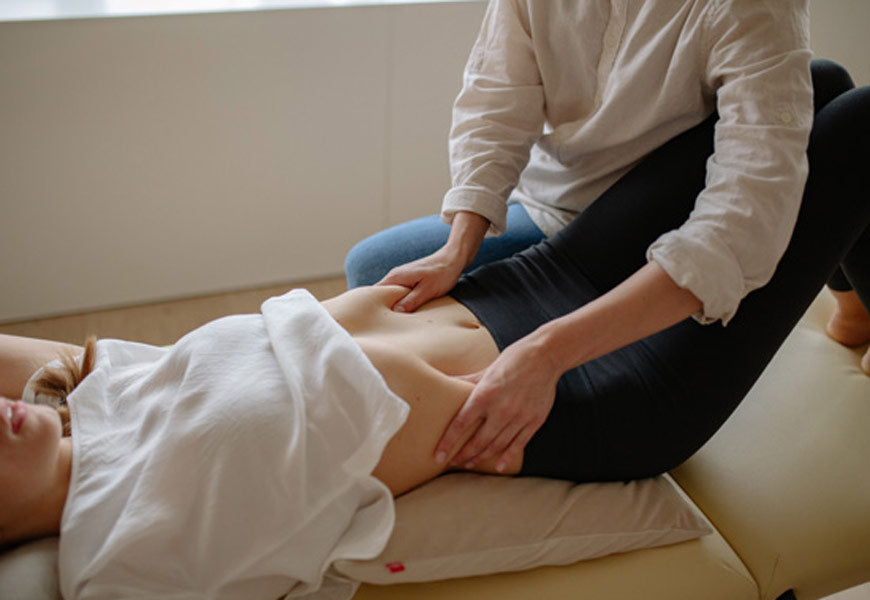
Your practitioner will be able to offer you one of these rehabilitation methods or combine them for more effectiveness. It may also include abdominal rehabilitation exercises, to strengthen the abdominal muscles, which are also damaged by pregnancy, and release pressure on the perineum. Each session lasts around 30 minutes, and you will usually leave with exercises to do every day at home. And yes, the work continues at home too!
Good to know: Social Security covers 10 perineal rehabilitation sessions, regardless of the method used. If you need a probe and electrodes, these will also be covered.
Re-educate your perineum at home
This rehabilitation work at home allows for action and sessions supervised by a professional. It is better to avoid rehabilitating your perineum alone, without the advice of a professional beforehand.
Geisha balls are two balls connected by a cord. Once placed in the vagina, you can perform exercises to work the perineal muscle.
Connected probes are a fun and practical way to strengthen your perineum at home. They are accompanied by contraction/relaxation exercises that you view on your smartphone. You can track your progress and pass levels, just like a video game. The downside is that they are not reimbursed and you have no one to guide you in your exercises and to ensure that they are done correctly. Because it must be said, many women are not aware of their perineum and need to be supported to make it work effectively.
This is why you should not hesitate to consult a midwife at the end of your rehabilitation at home, to ensure that your perineum is toned and perfectly operational again! Finally, note that it is entirely possible to repeat rehabilitation sessions after a few months if you feel that your perineum is weakened, or even outside of childbirth, at any age, in the event of urinary leakage.