4 weeks pregnant, 6 weeks gestational age

At 4 weeks pregnant (6 weeks gestation), your body is changing. Daylily Paris supports you with gentle and safe skincare for expectant mothers.
4 weeks of pregnancy (6 weeks amenorrhea): a tiny being already well settled
Welcome to your 1st month of pregnancy! At 4 weeks of pregnancy (6 weeks amenorrhea), it is often the magical moment when the future mom discovers she is expecting a baby 💕. Did your test just turn positive? Congratulations! It is often an emotional announcement to share with your partner. Even if your body does not yet show any visible signs, such as weight gain, everything is already active on the inside: your future baby is growing at an incredible speed, and your organism is transforming to welcome them as it should.
What happens in your body at 4 weeks of pregnancy
At this stage, the hCG hormone, produced by the forming placenta, begins to be clearly detectable from the fourth week of pregnancy. It is what pregnancy tests detect, and it is responsible for most of the pregnancy symptoms you may start to feel:
-
More pronounced fatigue,
-
Morning sickness (often as soon as you wake up),
-
Tender or more sensitive breasts,
-
Small twinges in the lower abdomen,
-
Hypersensitivity to odors, sometimes accompanied by a sensation of a sensitive or tight throat,
- And of course, absence of periods.
These signs simply show that your body is adapting to its new mission: nourishing and protecting your future baby, which can also lead to mood swings and emotional ups and downs that are normal in early pregnancy.
But don't worry if you don't feel anything for the moment; every woman is different, and reading articles can also help to better understand these early stages of pregnancy. In some pregnant women, symptoms manifest later, and that is completely normal 🌿.
Your uterus is slowly starting to change: its lining is thickening to accommodate the embryo, blood circulation is increasing, and the cervix is sealing shut. The placenta, meanwhile, is beginning to form from the trophoblast (the outer layer of the embryo). It is what will produce the hCG hormone and ensure, in the coming weeks, the vital exchanges between you and your baby.
The development of your baby
At 4 weeks of pregnancy, your embryo measures barely 1.5 to 2 mm, about the size of a poppy seed! It has grown a few mm since 3 weeks of pregnancy. And yet, it is already a real little factory of life 💕.
After traveling from the fallopian tube, the embryo has firmly implanted itself in the wall of your uterus. It is now surrounded by two important structures:
-
The yolk sac, which nourishes it before the placenta is fully functional,
-
And the amniotic cavity, where it is already floating in a light protective fluid.
Inside, everything is organizing at high speed:
-
The neural tube is beginning to form. It will give rise to the nervous system: the brain, the spinal cord, and the vertebral column.
-
The umbilical cord is beginning to set up, connecting the future baby to the placenta.
-
The heart is already forming and will start beating very soon ❤️, a moment often confirmed during the first ultrasound, where we still talk about a fetus at the very beginning of development.
-
The three layers of cells of the embryo (ectoderm, mesoderm, endoderm) are differentiating: each will give rise to different organs (skin, muscles, digestive system, etc.).
It is a tiny but critical period: in just a few days, the entire "blueprint" of the human body is put in place. Incredible, isn't it?
How to support these first weeks well?
During these first weeks of amenorrhea, your role is to take care of yourself, slowly but surely. Here are some simple and effective tips to support these first moments of pregnancy:
🍊 Adopt a diet rich in fruits and vegetables to stock up on vitamins and minerals. Foods containing vitamin B9 (folic acid) are particularly important: they contribute to the proper formation of the neural tube.
🧘♀️ Rest as soon as possible. Fatigue is normal: your body is spending a huge amount of energy to support the development of the embryo.
👩⚕️ Consult a healthcare professional (doctor, gynecologist, or midwife) now to schedule your first pregnancy follow-up, set a consultation date, and ensure everything is going well.
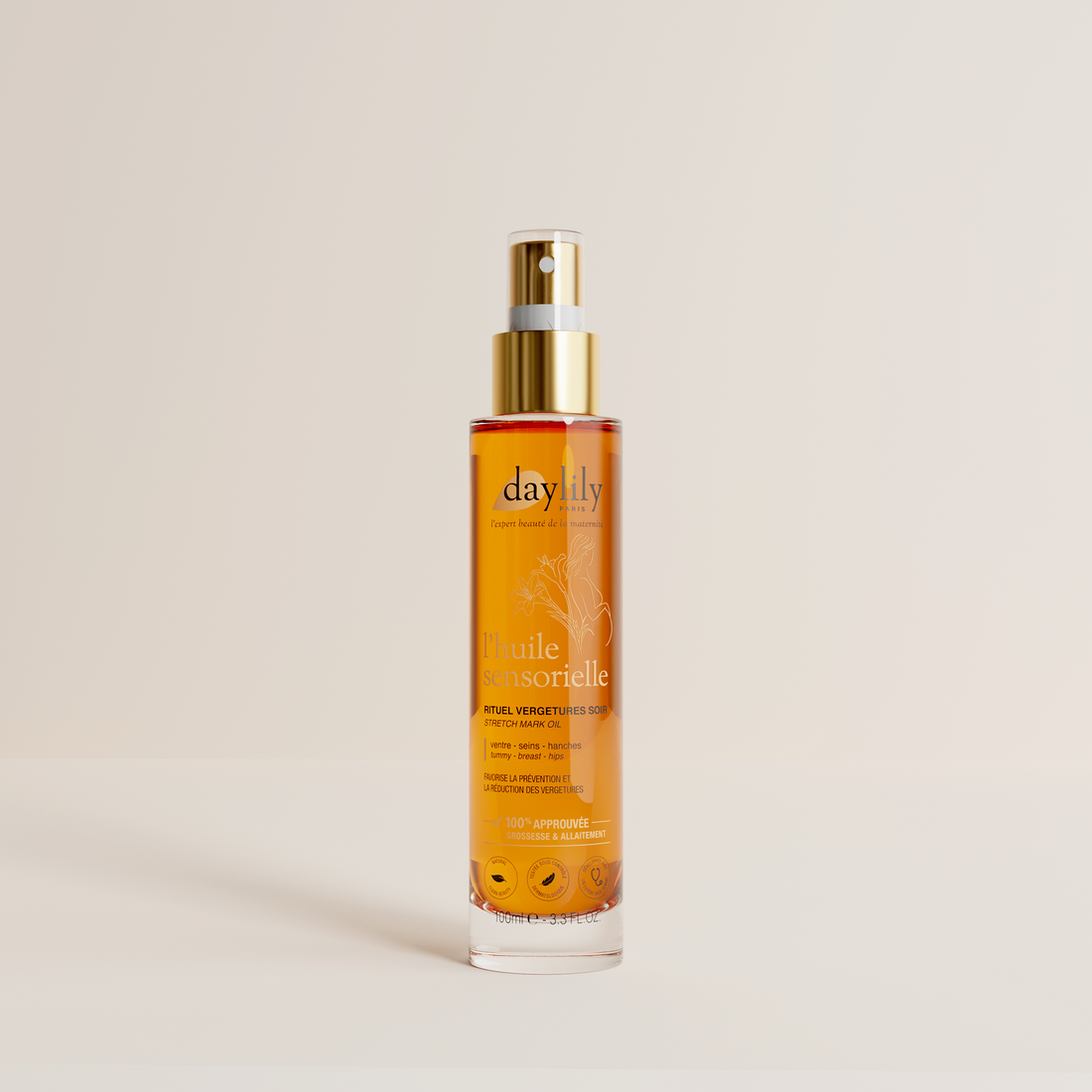
💧 And remember to take care of your skin by using stretch mark prevention treatments: it is the ideal time to adopt a gentle and natural routine.
You can, for example, use a nourishing pregnancy stretch mark oil, or alternate with a pregnancy stretch mark cream
Stay attuned to your body
The majority of pregnancies go perfectly well. But certain signs should encourage you to consult a healthcare professional without delay:
-
Intense abdominal pain,
-
Heavy bleeding,
-
Or any unusual symptom.
These signs can, in rare cases, indicate an ectopic pregnancy (when the embryo has implanted in the fallopian tube instead of the uterus). In this case, quick care is necessary for your safety.
In summary
At 4 weeks of pregnancy (6 weeks amenorrhea), your body and your future baby are already working hand in hand.
The hCG hormone continues to increase, the placenta is setting up, and the embryo's development is underway: neural tube, umbilical cord, nervous system, vertebral column... everything is starting to take shape.
Even if nothing is visible yet, everything is already happening on the inside.
So listen to your body, rest, eat healthily, and above all: enjoy this unique moment 🌸.
And to accompany this magical period, discover our pregnancy gift sets